






What's Happening?
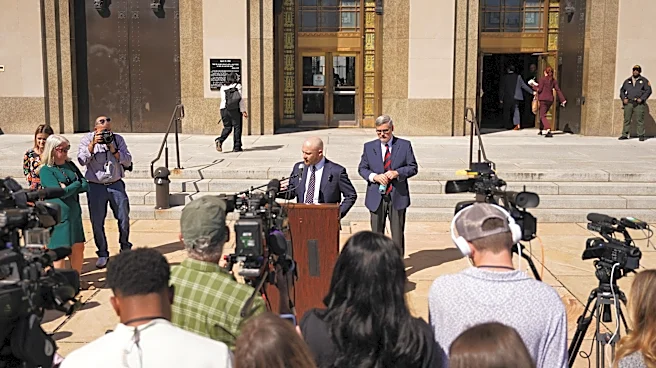
The Indiana state bar recently welcomed 286 new attorneys during an admission ceremony at the Indiana Convention Center. This group includes four individuals who passed the February bar exam and two Uniform Bar Examination (UBE) transfer applicants. Bar admission ceremonies
are held twice a year, in spring and fall, with the fall event typically seeing a larger number of admissions following the July bar exam. This year's spring ceremony admitted approximately 55 attorneys. The influx of new legal professionals comes as Indiana continues to grapple with a significant attorney shortage, with 49 out of its 92 counties classified as 'legal deserts.' A legal desert is defined as a county or non-rural ZIP code with fewer than one attorney per 1,000 residents.
Why It's Important?
The ongoing attorney shortage in Indiana poses a substantial challenge to access to justice across the state, particularly in rural areas. With nearly half of Indiana's counties designated as legal deserts, residents in these areas may face difficulties in obtaining legal representation for various matters, from civil disputes to criminal defense. This can lead to unequal access to legal services, potentially disadvantaging individuals and communities. The Indiana Supreme Court has recognized the severity of this issue, establishing the Commission on Indiana’s Legal Future in 2024 to explore solutions. Efforts to address the shortage are critical for ensuring that all Hoosiers have equitable access to the legal system and that the rule of law is upheld throughout the state.
What's Next?
The Indiana Supreme Court and the Indiana State Bar Association are actively working to mitigate the attorney shortage. The Commission on Indiana’s Legal Future is researching various strategies, including offering scholarships for attorneys pursuing roles as deputy prosecutors and public defenders, which are often difficult to fill in underserved areas. Additionally, the Indiana State Bar Association launched the Rural Practice Academy this summer, a program designed to incentivize and support attorneys practicing in rural communities. These initiatives aim to attract and retain legal talent in areas most affected by the shortage, with the long-term goal of improving access to legal services for all Indiana residents. Continued efforts will likely focus on recruitment, retention, and support for attorneys in underserved regions.
Beyond the Headlines
The attorney shortage in Indiana reflects a broader national trend where rural and underserved areas struggle to attract and retain legal professionals. This issue has profound societal implications, as the absence of legal counsel can exacerbate social inequalities and hinder economic development in affected regions. Beyond direct legal representation, attorneys often play crucial roles in community leadership, local governance, and business development. The initiatives undertaken by Indiana, such as the Rural Practice Academy and scholarships for public service roles, represent innovative approaches to address this complex problem. Their success could provide a model for other states facing similar challenges, highlighting the importance of targeted programs to ensure a robust and accessible legal system for all citizens.