
What's Happening?
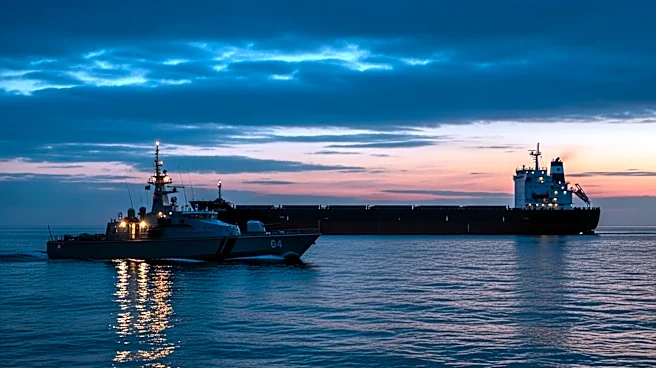
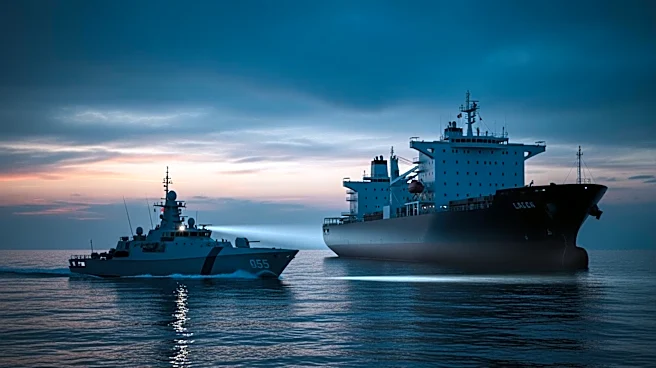
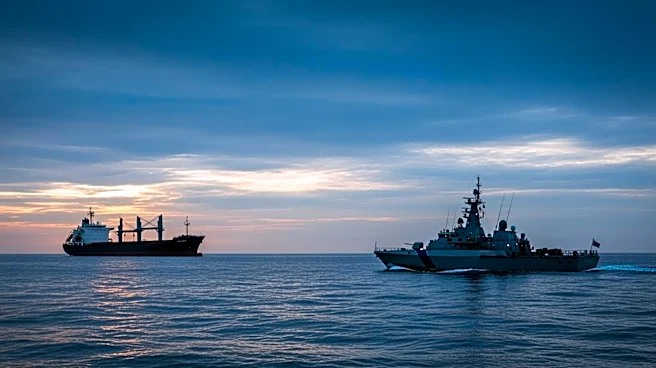
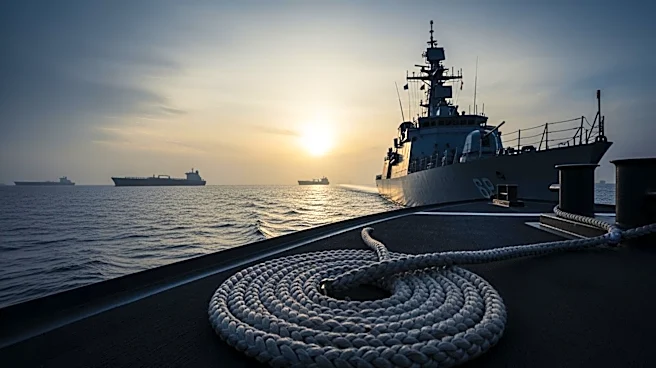
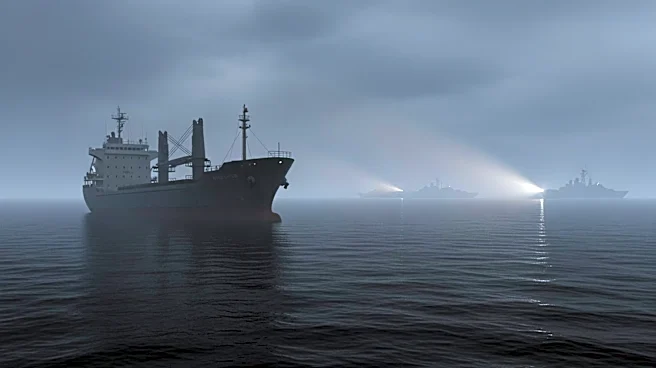
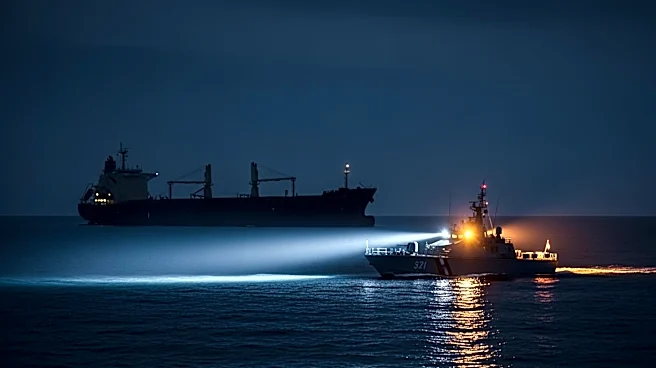
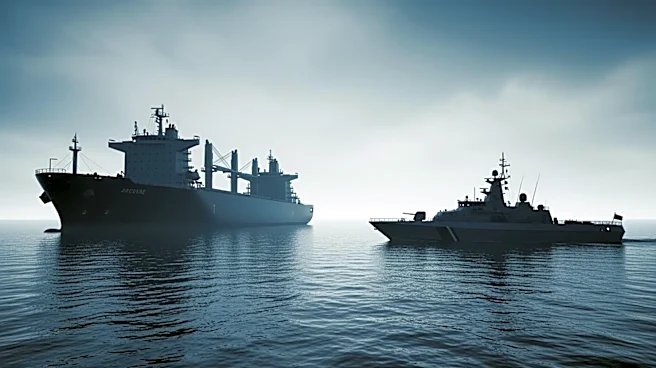
The United States Navy has expanded its blockade of Iranian ports, targeting Iran's shadow fleet, a covert network of oil and cargo vessels used to bypass sanctions. This escalation follows the seizure of the Iranian cargo vessel TOUSKA by U.S. forces,
which was intercepted after repeated warnings to comply with movement restrictions. The operation, part of a broader strategy to tighten pressure on Iran's maritime and energy exports, aims to prevent sanctioned cargo flows through the Strait of Hormuz and the Gulf of Oman. Iran has condemned the U.S. actions as 'piracy' and warned of potential retaliation, arguing that the interception of commercial vessels violates international agreements and could destabilize diplomatic discussions.
Why It's Important?
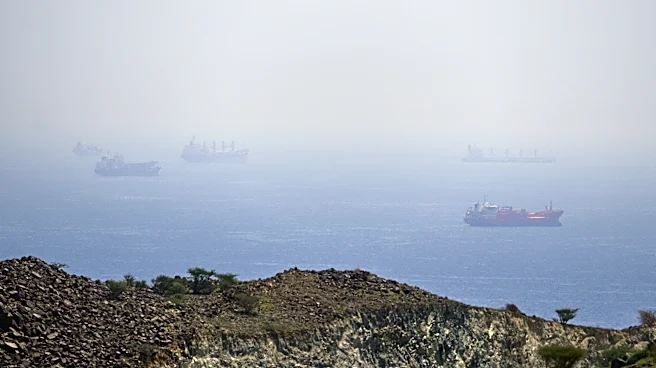
The U.S. blockade represents a significant escalation in efforts to curb Iran's ability to export oil and goods, which has implications for global shipping, energy flows, and regional stability. The shadow fleet, consisting of aging tankers and cargo ships, often operates under multiple flags and uses deceptive practices to avoid detection. The increased U.S. naval presence in the region is disrupting these operations, potentially affecting hundreds of vessels involved in similar sanction-evading activities. The situation poses environmental risks, as many of these vessels are poorly maintained, raising concerns about potential oil spills. The blockade could also impact diplomatic negotiations between the U.S. and Iran, as Tehran views the actions as aggressive and destabilizing.
What's Next?
The U.S. is likely to continue its enforcement efforts, with warships positioned along key maritime corridors and expanded interception authority. However, challenges remain in distinguishing legitimate commercial shipping from sanctioned operations, and questions persist about the legal and logistical aspects of detaining vessels. Iran may respond with retaliatory measures, potentially escalating tensions further. The international community will be watching closely, as the situation could have broader implications for regional security and global energy markets.
Beyond the Headlines
The blockade highlights the complex dynamics of maritime enforcement and the challenges of monitoring a vast and busy region like the Strait of Hormuz. The shadow fleet's adaptability, including changing routes and identifiers, complicates enforcement efforts. Additionally, the environmental risks associated with these operations underscore the need for international cooperation to address potential ecological disasters. The situation also raises questions about the effectiveness of sanctions and the lengths to which countries will go to circumvent them.