






What's Happening?
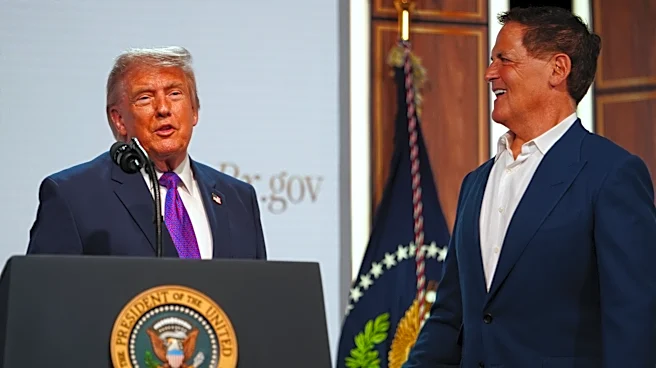
The Trump administration is reportedly considering the implementation of testing or licensing for powerful AI models before their public release. This move is in response to the growing threat of AI-driven cyberattacks. The White House, led by Chief of Staff
Susie Wiles, is focusing on ensuring that the most advanced and secure technology is deployed to protect against potential threats. This consideration comes amid a backdrop of increasing AI integration into various sectors, including national security, where AI models like Anthropic's Mythos have shown capabilities that rival elite human hackers. The administration's deliberation reflects a shift in policy, as such measures were previously deemed 'dangerous' and 'onerous'.
Why It's Important?
The potential regulation of AI models by the Trump administration could have significant implications for the tech industry and national security. By testing or licensing AI models, the government aims to mitigate risks associated with AI-driven cyberattacks, which could threaten critical infrastructure and financial systems. This move could also influence global AI governance, as the U.S. sets a precedent for other nations. Companies developing AI technologies may face increased scrutiny and regulatory hurdles, impacting innovation and market dynamics. The decision could also affect public trust in AI, as it addresses growing concerns about the technology's safety and ethical use.
What's Next?
If the Trump administration proceeds with testing or licensing AI models, it could lead to the establishment of new regulatory frameworks and standards for AI development. This may involve collaboration with tech companies, cybersecurity experts, and international partners to ensure comprehensive oversight. The decision could also prompt legislative action, with Congress potentially drafting new laws to govern AI technologies. Additionally, the tech industry may need to adapt to these changes by investing in compliance and security measures. The outcome of this deliberation will likely influence the future trajectory of AI innovation and its integration into society.