





What's Happening?
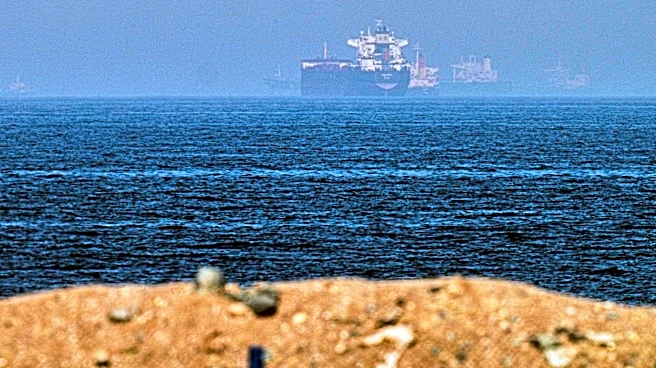
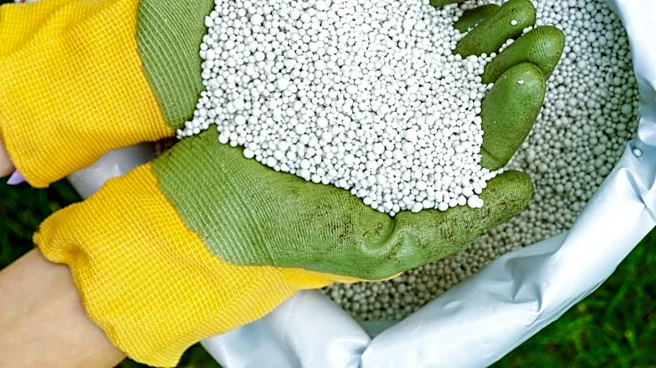
The OPEC Fund Quarterly report for Q3 2026 discusses the global fertilizer supply crisis exacerbated by the closure of the Strait of Hormuz. This disruption has significantly impacted the export of fertilizers from the Gulf region, leading to increased
global prices. The report highlights the vulnerability of global food production to such shocks, given the concentration of fertilizer production in a few countries. The OPEC Fund has launched a $1.5 billion initiative to help developing countries cope with these disruptions.
Why It's Important?
The fertilizer supply crisis has far-reaching implications for global agriculture and food security. Developing countries, particularly small island developing states, are heavily impacted due to their reliance on imported fertilizers. The increased costs could lead to higher food prices and inflation, straining economies already dealing with the aftermath of the COVID-19 pandemic and other geopolitical tensions. The OPEC Fund's initiative aims to stabilize markets and support vulnerable economies, highlighting the need for diversified and resilient supply chains.
What's Next?
Efforts to stabilize the fertilizer market will continue, with a focus on increasing production capacity and exploring alternative solutions. The OPEC Fund's initiative will provide immediate support, but long-term strategies are needed to reduce dependency on a few suppliers. This includes investing in new technologies and diversifying production locations. The global community may also need to address policy decisions that exacerbate supply shocks, such as export restrictions.