



What's Happening?
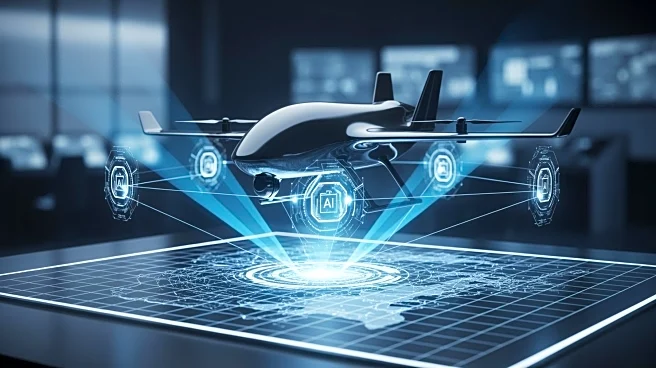
The U.S. Air Force is expanding its use of artificial intelligence (AI) to improve military operations, with a focus on decision support, intelligence, maintenance, logistics, and training. The Air Force is exploring business opportunities in AI, including
enterprise-level access to large language models (LLMs) and improved AI workflows. Col. Daniel May, the chief AI officer for Air Force intelligence, highlighted the need for premium access to LLMs to enhance machine-to-machine applications. The Air Force also aims to make AI models available in classified cloud services, facilitating the deployment of unclassified models to classified networks. Additionally, the Air Force is interested in applying agentic AI to missions like foreign disclosure, where AI can assist in policy research and decision-making.
Why It's Important?
The U.S. Air Force's focus on AI reflects a broader trend in military modernization, where AI technologies are increasingly seen as critical for maintaining strategic advantages. By integrating AI into various military operations, the Air Force aims to enhance efficiency, reduce operational costs, and improve decision-making processes. This initiative could lead to significant advancements in military capabilities, potentially influencing defense strategies and policies. The emphasis on AI also presents opportunities for government contractors (GovCons) to collaborate with the Air Force, driving innovation and economic growth in the defense sector.
What's Next?
The Air Force plans to continue its exploration of AI applications, with upcoming events like the 2026 Defense R&D Summit providing a platform for discussing AI's role in defense innovation. The Air Force's initiatives may prompt other military branches to adopt similar AI strategies, potentially leading to a more integrated and technologically advanced defense infrastructure. As AI technologies evolve, the Air Force will likely face challenges related to data security, ethical considerations, and the integration of AI with existing systems, requiring ongoing collaboration with industry experts and policymakers.