






What's Happening?
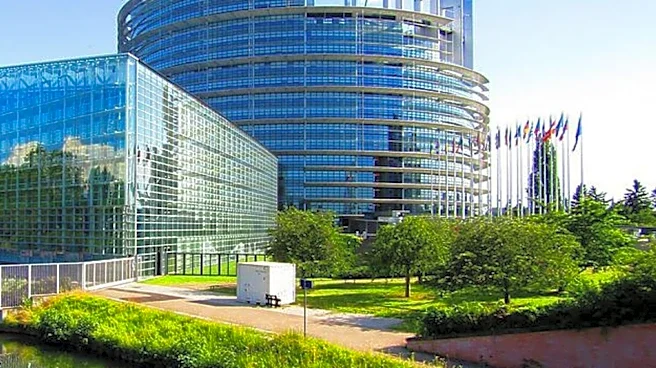
The European Parliament has passed a resolution advocating for stronger trade and investment relations between the European Union and Africa. The resolution emphasizes the need for fair, rules-based, and mutually beneficial partnerships, acknowledging
the growing interdependence between the two continents within a fragmented geopolitical context. Members of the European Parliament (MEPs) highlighted the significant untapped economic potential in Sub-Saharan Africa, recognizing its vital role in advancing Europe’s green and digital transitions. The Parliament expressed support for the African Continental Free Trade Area (AfCFTA) as a key mechanism to boost intra-African trade and reduce dependence on global markets. MEPs also called for modernizing economic partnership agreements to support sustainable growth, investment, and job creation, stressing that good governance, inclusive policies, and local job creation should remain central to the EU-Africa economic relationship. The Global Gateway strategy was also identified as an essential initiative to finance infrastructure projects and foster local value creation, ensuring investments benefit local communities.
Why It's Important?
This resolution is important as it signals a strategic shift towards deepening economic ties between the EU and Africa, recognizing Africa not just as a recipient of aid but as a crucial partner for mutual growth and stability. For the U.S., this could mean increased competition for influence and economic partnerships in Africa, a continent of growing geopolitical and economic significance. Stronger EU-Africa trade relations could also impact global supply chains and commodity markets, potentially affecting U.S. businesses and consumers. The emphasis on fair and rules-based partnerships, along with good governance and local job creation, aligns with broader international development goals and could set a precedent for how developed nations engage with emerging economies. The support for AfCFTA also highlights a move towards regional integration in Africa, which could create a more unified and attractive market for international investors, including those from the U.S.
What's Next?
Following the resolution, the European Commission is expected to act on the Parliament's recommendations to further deepen trade and investment ties with Africa. This will likely involve concrete proposals for modernizing economic partnership agreements and implementing the Global Gateway strategy. Discussions will continue with African nations to ensure that future agreements are mutually beneficial and support sustainable development. The resolution also calls for strengthening regional integration within Africa, which may lead to increased EU support for initiatives like the AfCFTA. The focus on good governance and inclusive policies suggests that future EU-Africa economic engagements will likely include conditions related to these aspects. The long-term goal is to work towards a win-win free trade zone between the EU and Africa, which would require extensive negotiations and cooperation.
Beyond the Headlines
Beyond the immediate economic implications, this resolution reflects a broader geopolitical strategy by the EU to secure its interests and values in a rapidly changing global order. By strengthening ties with Africa, the EU aims to diversify its economic partnerships, reduce reliance on other major powers, and address shared challenges such as climate change and digital transformation. The emphasis on local value creation and sustainable growth also suggests a move away from traditional extractive models of engagement, potentially fostering more equitable development in Africa. This approach could serve as a model for other global powers, including the U.S., in their own engagements with African nations. The resolution also implicitly acknowledges the growing influence of other global players, such as China, in Africa, positioning the EU as a partner committed to a more balanced and sustainable development path.