
What's Happening?
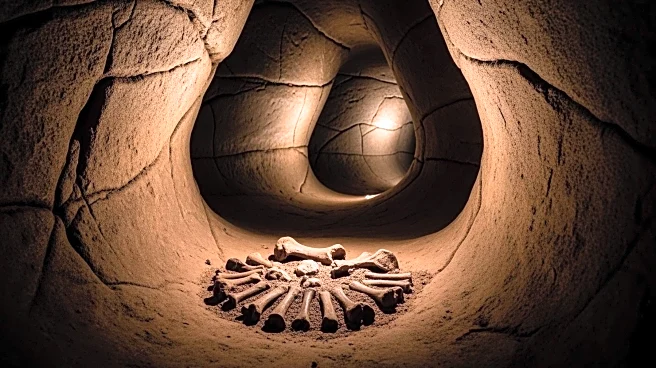
In 2013, researchers discovered the remains of Homo naledi, an ancient human species, in South Africa's Rising Star cave system. Despite having a brain size only one-third of modern humans, evidence suggests
that Homo naledi may have intentionally placed their dead in the cave, indicating early burial practices. This finding challenges the notion that complex emotions and rituals, such as funerals, require large brains. The discovery prompts a reevaluation of what it means to be human and the origins of cultural practices related to death.
Why It's Important?
The potential evidence of burial practices by Homo naledi could significantly alter the understanding of human evolution and the development of cultural behaviors. If confirmed, it suggests that the capacity for ritual and symbolic thought existed much earlier than previously believed, possibly hundreds of thousands of years ago. This challenges the assumption that such behaviors are exclusive to Homo sapiens and could lead to a broader understanding of the cognitive abilities of ancient human species. The discovery may influence future research in anthropology and archaeology, prompting new investigations into the social and cultural lives of early humans.