



What's Happening?
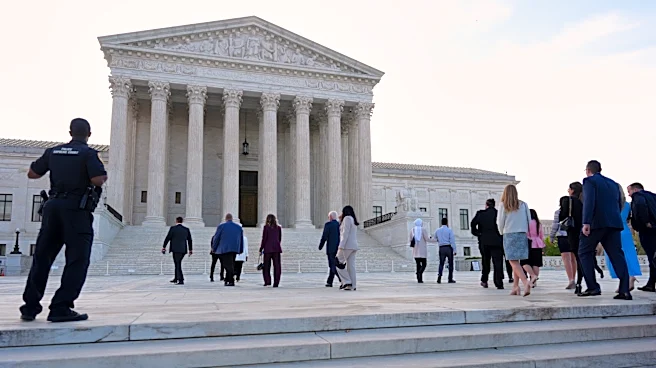
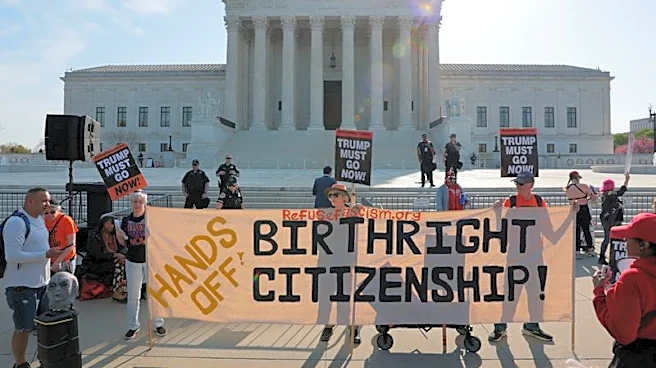
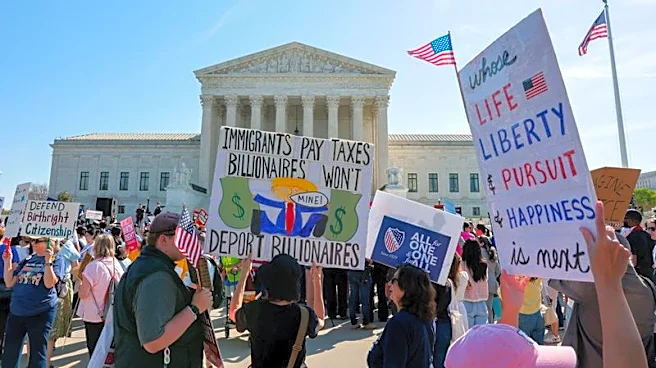
The U.S. Supreme Court is currently hearing a case challenging the constitutional right to birthright citizenship, a practice enshrined in the 14th Amendment. President Trump attended the oral arguments, marking a rare appearance by a sitting president
at the court. The case, argued by Solicitor General D. John Sauer, questions the automatic citizenship granted to individuals born on U.S. soil. Several justices, including Chief Justice John Roberts and Justices Neil Gorsuch and Brett Kavanaugh, expressed skepticism about the arguments presented by the Trump administration, questioning the historical and legal basis of their claims.
Why It's Important?
The outcome of this case could have significant implications for U.S. immigration policy and the interpretation of the 14th Amendment. A ruling against birthright citizenship could affect millions of individuals born in the U.S. to non-citizen parents, potentially altering their legal status and rights. The case also highlights the ongoing national debate over immigration and citizenship, with potential impacts on social and political dynamics in the country.
What's Next?
A decision from the Supreme Court is expected in the summer. The ruling will likely influence future immigration policies and could prompt legislative action depending on the outcome. Advocacy groups and civil rights organizations are closely monitoring the case, preparing for potential responses based on the court's decision.