





What's Happening?
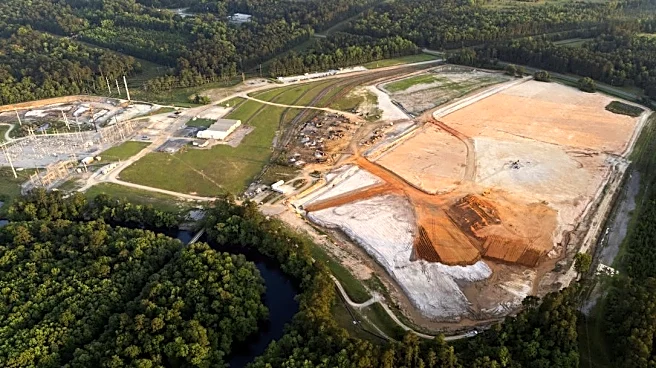
A state circuit court judge in South Carolina has postponed a decision regarding the completion of construction for the proposed $3 billion Valara data center in Spartanburg. The central issue revolves around whether the Valara project is classified as a major
or minor development. This classification is critical because it determines whether decisions can be made by county planning staff or if public hearings through the County Planning Commission are required. If deemed a minor development, county staff could proceed with review processes; if major, public hearings would be mandatory. Construction on the Valara site has already commenced and is continuing while the court deliberates. Last month, the state Public Service Commission dismissed a legal challenge by the Southern Environmental Law Center, which had argued that the site constituted a power plant. Additionally, other lawsuits are currently seeking to halt the project's construction entirely. The Valara project is distinct from the stalled Lighthouse data center project, which the County Planning Commission voted to halt last month.
Why It's Important?
The judge's delayed decision and the ongoing legal challenges highlight significant regulatory and environmental concerns surrounding large-scale infrastructure projects like data centers. The classification of the Valara project as 'major' or 'minor' has profound implications for public participation and transparency in the development process. A 'major' designation would empower the public and local planning bodies with greater oversight through mandatory hearings, ensuring community input on a project with a substantial local impact. Conversely, a 'minor' classification would streamline the process, potentially accelerating construction but limiting public scrutiny. The involvement of environmental groups and the dismissal of the 'power plant' argument by the Public Service Commission underscore the complex interplay between economic development, environmental protection, and regulatory frameworks. This situation reflects a broader tension between rapid technological expansion and the need for responsible, community-inclusive development practices.
What's Next?
The Spartanburg County Council is scheduled to discuss the Valara project next week, indicating that local political bodies will continue to play a role in its future. The state circuit court judge's decision on the project's classification remains pending, and this ruling will be a critical determinant of the next steps. If the project is classified as 'major,' it will likely trigger a series of public hearings, potentially extending the timeline for completion and increasing opportunities for public and environmental advocacy. If classified as 'minor,' the project could proceed more quickly, though other lawsuits seeking to halt construction will still need to be resolved. The ongoing construction, despite legal uncertainties, suggests a high-stakes situation where developers are pushing forward while legal and regulatory battles unfold. The outcome will set a precedent for how similar large-scale data center projects are reviewed and approved in South Carolina.
Beyond the Headlines
This case in Spartanburg transcends a simple zoning dispute; it illuminates the growing societal debate over the environmental and community impacts of data centers. These facilities, while crucial for the digital economy, are energy-intensive and can place significant demands on local resources, including power grids and land. The legal challenges and the push for public hearings reflect a rising demand for greater transparency and accountability from developers and local governments regarding the long-term consequences of such projects. The distinction between a 'data center' and a 'power plant' also highlights a regulatory gray area that may need clearer definitions as technology evolves. This situation could catalyze broader discussions about sustainable development practices for data infrastructure, the role of community engagement in large-scale projects, and the need for robust environmental impact assessments to balance economic growth with ecological preservation and local quality of life.