






What's Happening?
Currently, there is no active federal stimulus program providing new direct payments to California residents. Previous rounds of COVID-19 relief, which included stimulus checks for many households, were one-time measures. These past payments were typically
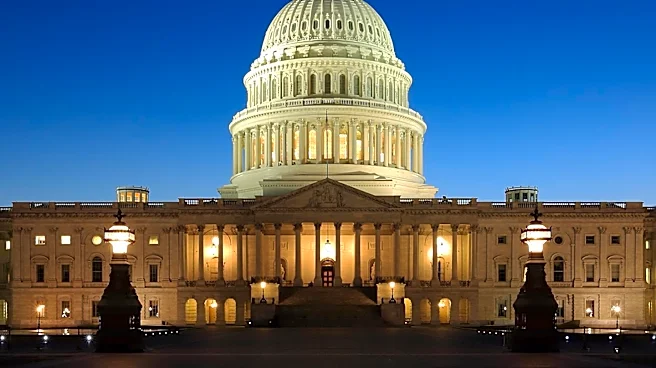
targeted at individuals and households with lower and middle incomes to support spending and stabilize the economy. Eligibility was generally based on tax returns and Social Security records, with income phaseouts and specific rules for dependents. For instance, in March 2021, a third round provided $1,400 to single filers with income phaseouts starting at $75,000. December 2020 saw a second round of $600, and April 2020 included a first round of $1,200. These federal payments did not require action from eligible individuals who filed taxes or received federal benefits. California also implemented its own state-level utility and tax rebates, which are distinct from federal stimulus. Any future stimulus legislation would need to be passed by Congress and signed into law to initiate new payments.
Why It's Important?
The absence of an active federal stimulus program means that California residents should not expect new direct payments from the federal government at this time. This is important for financial planning for households, particularly those with lower and middle incomes who previously relied on these one-time payments for economic support. The distinction between federal stimulus checks, which require congressional action and are emergency-driven, and ongoing state refund programs, which are often tied to utility bills or tax overpayments, is crucial to avoid misinformation. Understanding these differences helps individuals accurately assess their financial outlook and avoid making decisions based on speculative information. The previous rounds of federal stimulus played a significant role in supporting consumer spending and providing a safety net during economic uncertainties, and their discontinuation impacts the broader economic landscape by removing a direct injection of funds into the economy.
What's Next?
For any new federal stimulus payments to be issued, future legislation would need to pass through Congress and be signed into law. If such legislation were to be enacted, eligibility criteria would depend on the specific provisions of that law. However, past rules provide a baseline, typically involving income phaseouts, household size, immigration status, and tax filing requirements. Changes in personal circumstances, such as marriage, divorce, or the addition of a dependent, could affect eligibility. California-specific factors do not override federal rules, but the state may continue to implement its own relief programs, which are separate from federal stimulus. Individuals seeking information on potential future payments should rely on authoritative sources such as the Internal Revenue Service (IRS) website, official California state government sites for tax and rebate programs, and congressional pages if legislation is actively being debated.
Beyond the Headlines
The reliance on one-time federal stimulus measures during economic crises highlights a broader policy debate regarding the most effective and sustainable methods for economic stabilization and support for vulnerable populations. While direct payments offer immediate relief and can boost consumer spending, their temporary nature means they do not address underlying systemic economic challenges. The distinction between federal and state-level relief also underscores the complexities of intergovernmental fiscal relations and the varying capacities of states to provide support. The potential for misinformation surrounding stimulus payments emphasizes the critical need for public financial literacy and the ability to discern credible information from official sources. This ongoing cycle of emergency-driven federal intervention versus sustained state-level programs shapes public expectations and influences the long-term economic resilience of households and communities.