



What's Happening?
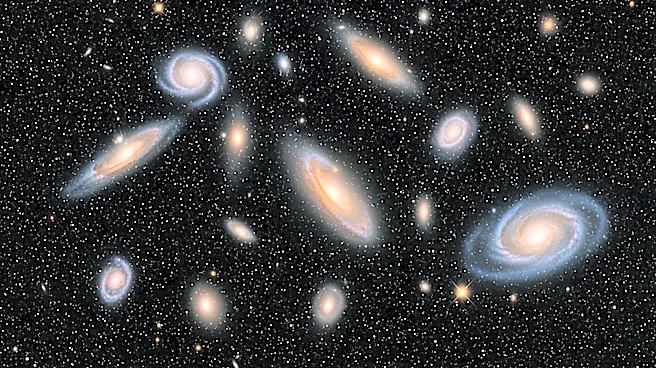
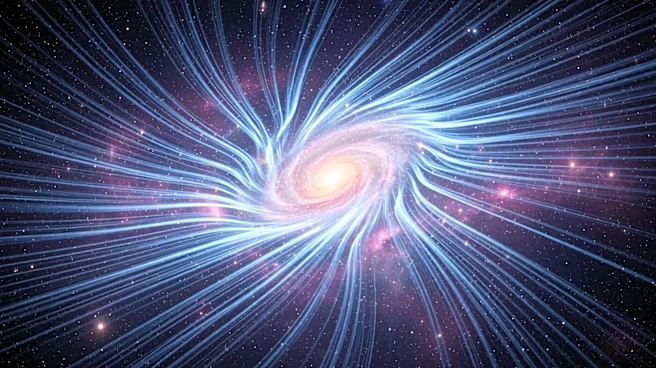
Astronomers have identified a 'galaxy-killing wind' that may explain the abundance of massive 'dead' galaxies in the early universe. This wind, driven by cosmic collisions between galaxies, expels gas at a rate that outpaces star formation, leading to
the premature death of galaxies. The study, published in the Monthly Notices of the Royal Astronomical Society, utilized data from the James Webb Space Telescope and the Atacama Large Millimeter/submillimeter Array. The research focused on a galaxy named CRISTAL-02, which is forming stars at twice the rate of similar galaxies but is also losing gas rapidly due to these winds. This phenomenon suggests that many early galaxies experienced rapid growth followed by a swift decline, contributing to the high number of dead galaxies observed in the early universe.
Why It's Important?
The discovery of galaxy-killing winds provides a simpler explanation for the presence of dead galaxies in the early universe, challenging previous theories that suggested dark energy played a more significant role. This finding has implications for our understanding of galaxy evolution and the forces that shape the universe. It highlights the impact of cosmic collisions and star formation on galaxy life cycles, offering insights into the processes that lead to the cessation of star formation. This research could reshape theories about the early universe and the factors that influence galaxy development, potentially affecting models of cosmic evolution and the role of dark energy.
What's Next?
Future research will likely focus on identifying other galaxies experiencing similar phenomena to CRISTAL-02. Continued observations with the James Webb Space Telescope and other instruments will help determine the prevalence of galaxy-killing winds and their impact on galaxy evolution. Scientists may also explore the implications of these findings for understanding the role of dark energy and other cosmic forces in shaping the universe. Further studies could refine models of galaxy formation and death, providing a more comprehensive picture of the early universe's dynamics.