
What's Happening?
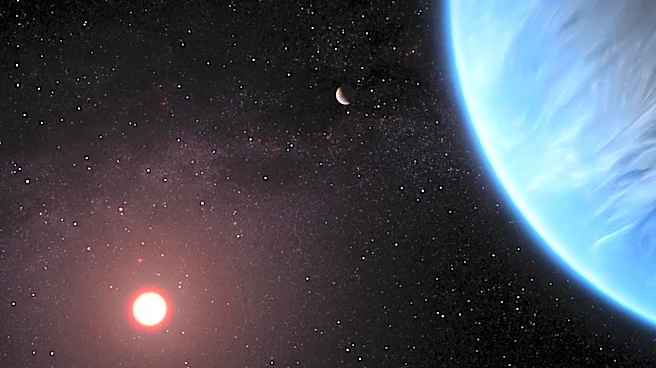
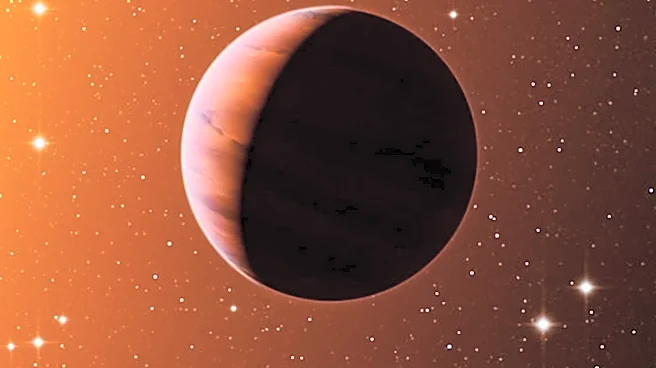
Astronomers have confirmed the existence of GJ 887 d, a potentially habitable planet orbiting a red dwarf star 10.7 light-years away. This discovery makes GJ 887 d the second-closest known planet in a star's
habitable zone after Proxima Centauri b. The confirmation was made through precise radial-velocity measurements, which detected the planet's influence on its star. GJ 887 d orbits its star every 50.77 days, placing it within the habitable zone where conditions might support liquid water.
Why It's Important?
The confirmation of GJ 887 d adds to the growing list of potentially habitable exoplanets, offering new opportunities for studying planetary environments beyond our solar system. Its proximity to Earth makes it an ideal candidate for future observations, which could provide insights into its atmosphere and potential for life. This discovery highlights the advancements in exoplanet detection techniques and the ongoing search for Earth-like worlds, contributing to our understanding of planetary formation and habitability.
What's Next?
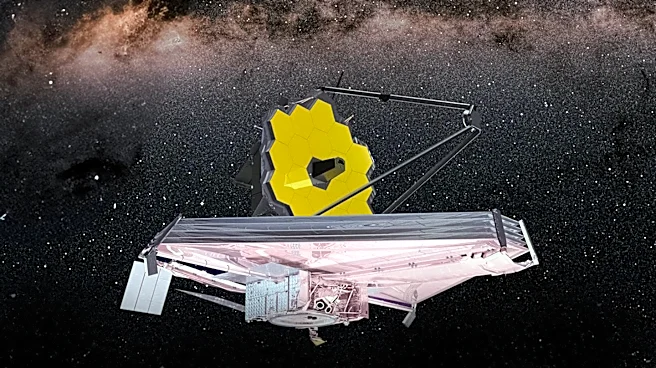
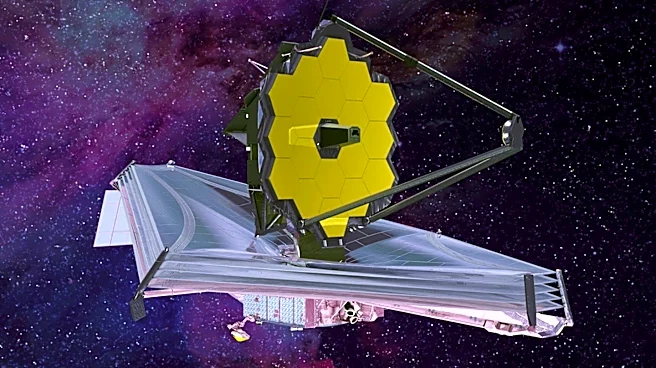
Future telescopes and missions may focus on GJ 887 d to gather more detailed information about its composition and atmosphere. Direct imaging and spectroscopic studies could reveal whether the planet has an atmosphere capable of supporting life. The scientific community will likely prioritize this system for follow-up observations, given its proximity and potential for habitability. These efforts could pave the way for more comprehensive studies of nearby exoplanets and their potential to host life.