
What's Happening?
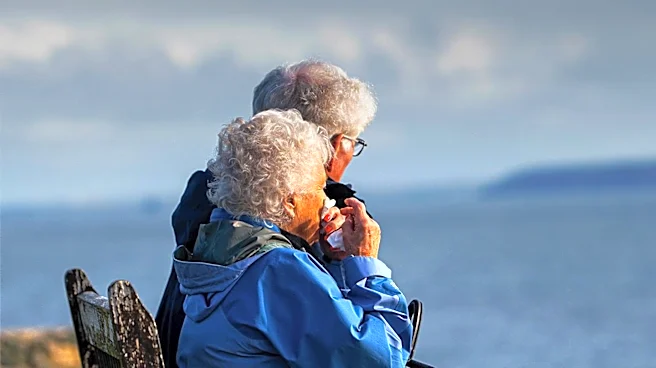
A new study by Stanford University researchers indicates that a significantly higher number of elderly individuals are at risk of illness or death from extreme heat due to climate change. The study, which
factored in how age affects the body's heat tolerance, found that previous assessments substantially underestimated the risk to older people by assuming everyone could tolerate heat as well as a healthy young adult. Global warming is currently estimated at approximately 1.4°C above preindustrial levels, with the annual global average exceeding 1.5°C for the first time in 2024. The research suggests that elderly people reach the threshold of 'uncompensable heat stress' much sooner and at lower temperatures than younger adults. For instance, individuals aged 65 and older face more exposure to uncompensable heat at 1.5°C of global warming than younger adults would at 4°C of warming. Each additional degree of global warming above preindustrial levels is projected to bring about one billion more people into the bracket of experiencing 180 hours of uncompensable heat per year, with most being elderly.
Why It's Important?
This research is crucial because it redefines the understanding of human heat tolerance and highlights a significant public health challenge, particularly for the U.S. and globally. The U.S. has a growing elderly population, making this demographic increasingly vulnerable to the impacts of rising temperatures. The findings necessitate a re-evaluation of public health strategies and infrastructure to protect older adults during heatwaves. Current heat warning systems and cooling centers may be insufficient if they are based on thresholds suitable for younger, healthier adults. Economically, increased heat-related illnesses and deaths among the elderly could strain healthcare systems and lead to higher medical costs. Socially, it underscores the need for community support systems and awareness campaigns tailored to the specific vulnerabilities of older populations. The study's emphasis on low-income countries like China, India, and Pakistan as being at highest risk also points to potential international humanitarian crises and migration pressures if these populations are severely impacted by uncompensable heat exposure.
What's Next?
The Stanford researchers recommend developing mitigating strategies based on a more accurate understanding of human heat tolerance limits. These strategies include revising urban landscapes to incorporate more green infrastructure, enhancing ventilation in buildings, reducing anthropogenic heat emissions, establishing more accessible and effective cooling centers, and improving heat warning and response systems. There is a call to prioritize clinically vulnerable communities, especially older adults who may be socially isolated, economically disadvantaged, or have chronic health conditions. Given that most heat-related deaths among older adults occur indoors, ensuring broader access to air conditioning or other cooling facilities supported by resilient energy infrastructure is a key recommendation. In the long term, the study emphasizes that reducing global emissions remains the primary method for controlling global warming and its severe health consequences.
Beyond the Headlines
The study's findings delve into the ethical and societal implications of climate change, revealing a disproportionate impact on the elderly. It challenges the conventional approach to defining dangerous heat, arguing that a universal temperature threshold is inadequate and that vulnerability depends significantly on individual factors like age. This shift in understanding could trigger a re-evaluation of urban planning and architectural design to create more age-friendly and climate-resilient environments. The research also implicitly raises questions about intergenerational equity in the face of climate change, as younger generations' actions (or inactions) on emissions directly affect the health and survival of older populations. Furthermore, the focus on indoor heat-related deaths highlights the often-overlooked issue of housing quality and access to cooling technologies as critical determinants of health outcomes during extreme heat events, particularly for vulnerable groups.