







What's Happening?
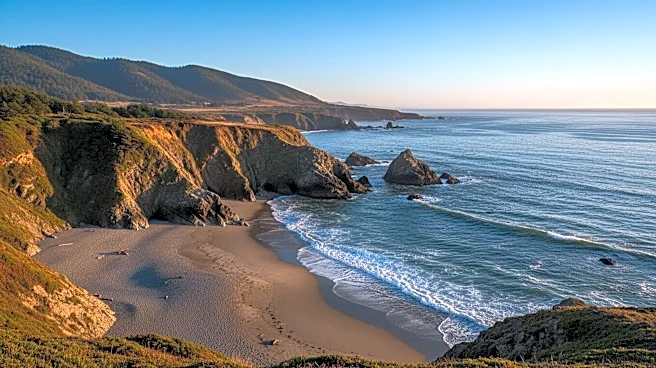
A significant portion of California's Mendocino County coastline, encompassing 136 acres of beach and coastal bluffs, is being transferred to an Indigenous peoples group. This decision was approved by a state commission backed by Governor Gavin Newsom.
The land, previously managed by the California Department of Transportation (Caltrans), will now be under the stewardship of Kai Poma, a nonprofit organization established by the Sherwood Valley Band of Pomo Indians, Round Valley Indian Tribes, and Coyote Valley Band of Pomo Indians. This transfer marks the first instance in California's history where state-managed land is being handed over to a Native American group. The area, known for its cultural and spiritual significance, has been used traditionally for gathering seaweed and abalone and hosting youth cultural camps. The transfer follows a change in state law in 2021, which allowed Caltrans to transfer state-owned property to tribal governments.
Why It's Important?
This land transfer is a landmark event in California, representing a significant step towards recognizing and restoring Indigenous rights and stewardship over ancestral lands. By transferring the land to Kai Poma, the state acknowledges the cultural and historical ties of the Native American tribes to this region. This move is expected to protect sensitive natural and cultural resources from damage caused by unregulated public access, which has been a concern in recent years. The transfer also sets a precedent for future land restitution efforts, potentially influencing similar actions across the United States. For the tribes involved, this transfer is not only a reclamation of land but also a restoration of cultural heritage and traditions that have been disrupted by colonization.
What's Next?
Following the transfer, Kai Poma plans to conduct cultural, archaeological, and environmental surveys to develop a long-term resource management plan. The nonprofit will work with the California Coastal Commission to ensure public access is maintained from sunrise to sunset, while also protecting the land's cultural and natural resources. The transfer agreement prohibits commercial activities on the property, ensuring that the land remains a site for cultural preservation and public enjoyment. This initiative may inspire other states to consider similar transfers, promoting Indigenous stewardship of culturally significant lands.