






What's Happening?
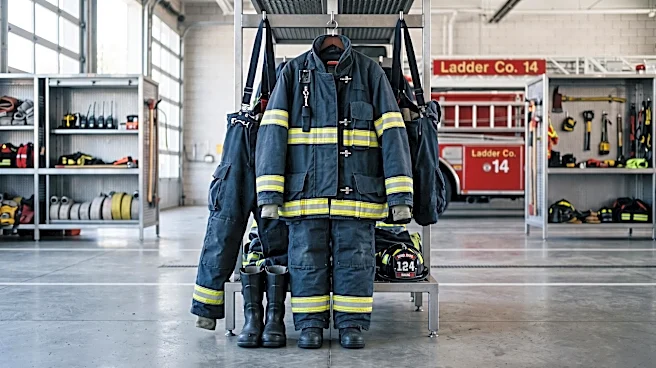
Pennsylvania Governor Josh Shapiro has signed Act 98 of 2026 into law, which restricts the use of per- and polyfluoroalkyl substances (PFAS), commonly known as 'forever chemicals,' in firefighting class B foam and turnout gear. The new legislation prohibits
the manufacture, sale, distribution, and use of PFAS-containing firefighting foam starting in July 2027, with a complete ban by 2028. Additionally, all firefighting turnout gear containing PFAS will be required to carry a warning label. The law includes exemptions for facilities where PFAS-based foam is deemed necessary for safety, such as airports, chemical plants, oil refineries, and sites handling flammable liquids or natural gas. This move aims to protect firefighters from exposure to these chemicals, which are linked to adverse health effects, and to safeguard drinking water supplies.
Why It's Important?
This new Pennsylvania law is significant for public health and environmental protection, particularly for firefighters who face direct exposure to PFAS through their equipment and the foam they use. PFAS chemicals have been linked to various health issues, including cancer, and their persistence in the environment poses a long-term threat to water quality. By phasing out these chemicals, Pennsylvania is taking a proactive step to mitigate these risks. However, the transition presents challenges, especially regarding the cost of disposing of existing PFAS foam and acquiring new, non-PFAS compliant gear. The lack of dedicated state funding for disposal and the higher cost of alternative equipment could strain fire departments, particularly volunteer organizations, impacting their operational budgets and readiness.
What's Next?
The law sets a clear timeline for the phase-out of PFAS in firefighting foam, with restrictions beginning in July 2027 and a full ban by 2028. Fire departments and industrial facilities will need to transition to PFAS-free alternatives and manage the disposal of their current PFAS-containing foam. Concerns remain about the funding for these transitions, as Pennsylvania has not allocated specific funds for PFAS foam disposal, unlike some other states. The state is also considering House Bill 2826, which would establish a cancer screening program for firefighters, acknowledging the occupational health risks they face, including exposure to PFAS. The effectiveness of the new non-PFAS gear in terms of durability and performance, particularly its oil and hydrocarbon repellency, will be closely monitored by the fire service.
Beyond the Headlines
The Pennsylvania law highlights a broader national and international movement to address the pervasive issue of PFAS contamination. While the immediate focus is on firefighting, PFAS are present in numerous consumer products and industrial applications, making their widespread elimination a complex challenge. The debate over 'forever chemicals' also underscores the tension between industrial innovation and public health, as some replacements for PFAS may introduce their own set of health concerns. This legislation could serve as a model for other states, influencing national policy and driving further research into safer chemical alternatives and effective remediation strategies for existing contamination. The long-term implications involve not only environmental cleanup but also a re-evaluation of chemical safety standards across various industries.