






What's Happening?
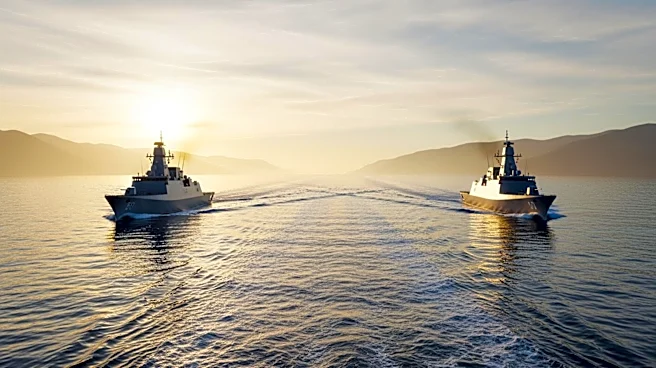
US Navy ships have reportedly crossed the Strait of Hormuz for the first time since the onset of the conflict with Iran. This move coincides with US-Iran ceasefire negotiations taking place in Pakistan. President Trump announced that the US is beginning
to clear underwater mines from the strait, a strategic waterway crucial for global oil shipments. Iran, however, has denied the crossing and issued a warning that any unauthorized US military ships would be attacked within 30 minutes if they attempt to enter the strait. Despite these threats, US officials have stated that no such warnings were received, and the crossing was part of a 'freedom-of-navigation mission.'
Why It's Important?
The Strait of Hormuz is a vital maritime chokepoint through which a significant portion of the world's oil supply is transported. The US Navy's actions in the strait underscore the strategic importance of maintaining open navigation routes, especially amid heightened tensions with Iran. The US's decision to clear mines from the strait is seen as a move to ensure the safety of international shipping lanes, which is critical for global energy markets. The situation also highlights the fragile nature of US-Iran relations and the potential for escalation if diplomatic efforts fail. The involvement of multiple nations in the region further complicates the geopolitical landscape.
What's Next?
The ongoing negotiations in Pakistan between US and Iranian officials are crucial in determining the next steps. If successful, they could lead to a de-escalation of military tensions and a potential ceasefire. However, Iran's threats to attack US vessels indicate that any misstep could lead to renewed hostilities. The international community, particularly countries reliant on oil shipments through the strait, will be closely monitoring the situation. Future US naval operations in the region will likely be scrutinized for their impact on diplomatic efforts and regional stability.