
What's Happening?
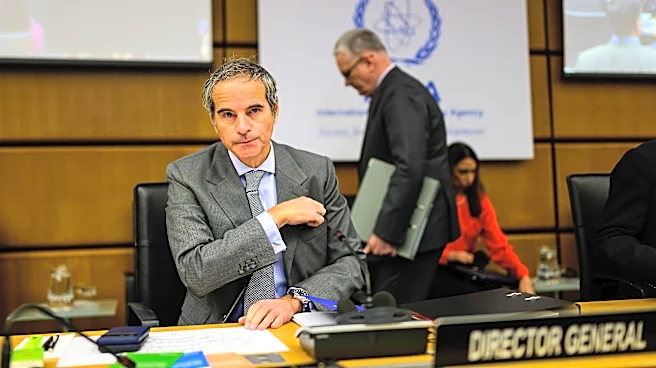
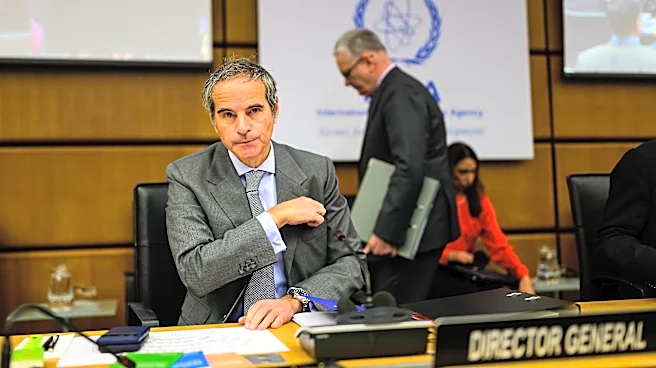
Iran has formally requested the International Atomic Energy Agency (IAEA) to cease restrictions on its technical cooperation activities. According to a statement delivered at a meeting of the Agency’s
Technical Assistance and Cooperation Committee (TACC) in Vienna, Iran argues that UN Security Council resolutions concerning its nuclear program have long expired and should not be used to impede the IAEA's assistance. The Iranian representative highlighted Articles II and III of the IAEA Statute, which mandate the Agency to provide member states with necessary materials, services, equipment, and facilities without political, economic, military, or other discriminatory conditions. Iran reported disruptions in recent months, including rejected expert nominations, difficulties in training course registrations, prolonged delays in equipment delivery, and pending reference materials. The delegation emphasized that technical cooperation activities must adhere to the IAEA Statute, the Nuclear Non-Proliferation Treaty (NPT), and principles of impartiality and non-discrimination.
Why It's Important?
This development is important as it underscores ongoing tensions surrounding Iran's nuclear program and its relationship with international oversight bodies. Iran's assertion that expired UN Security Council resolutions are being arbitrarily used to restrict its access to peaceful nuclear technology challenges the current framework of international nuclear non-proliferation efforts. If the IAEA were to concede to Iran's demands, it could set a precedent for other nations seeking to bypass existing restrictions, potentially weakening the Agency's authority and the broader non-proliferation regime. Conversely, if the restrictions remain, Iran may continue to perceive itself as unfairly targeted, potentially escalating diplomatic friction and complicating future negotiations regarding its nuclear activities. The dispute highlights the delicate balance between a nation's right to peaceful nuclear technology and international concerns over proliferation.
What's Next?
The IAEA will likely need to address Iran's formal request and the underlying legal interpretations of the expired UN Security Council resolutions. The Agency's response will be crucial in determining the future trajectory of its technical cooperation with Iran and could influence the broader international discourse on nuclear non-proliferation. Other member states, particularly those with significant stakes in nuclear security, will closely monitor the IAEA's decision. Continued diplomatic engagements and potentially further discussions within the TACC or the IAEA Board of Governors are anticipated. The outcome could either lead to a re-evaluation of existing restrictions or a reinforcement of the current stance, with potential implications for Iran's willingness to cooperate on other nuclear-related matters.
Beyond the Headlines
The dispute extends beyond a mere administrative or legal disagreement, touching upon fundamental questions about the value of membership in international organizations and the impact of political pressure on their operations. Iran's argument that denying legitimate cooperation undermines the benefits of IAEA membership raises concerns about the Agency's impartiality and its susceptibility to external political influence. This situation could prompt a broader debate within the international community regarding the application of sanctions and restrictions, particularly when they intersect with a member state's rights under international treaties. The long-term implications could include a re-evaluation of the IAEA's operational guidelines or a push for greater clarity on the duration and applicability of UN Security Council resolutions in the context of technical cooperation.