



What's Happening?
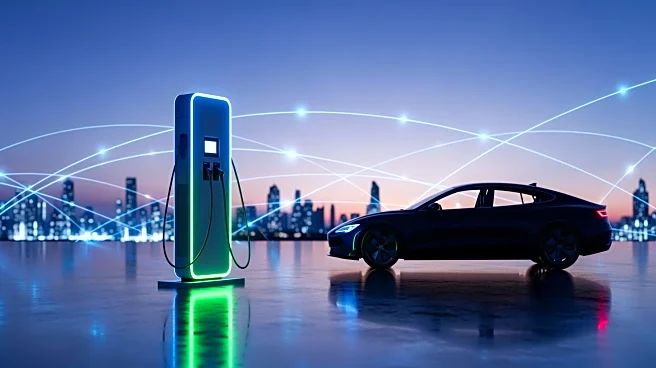
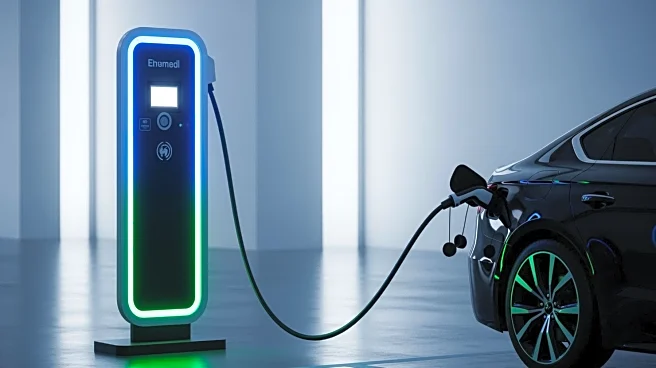
Electric vehicle (EV) sales in Europe have seen significant growth despite a general decline in the new car market. According to the European Automobile Manufacturers Association (ACEA), battery electric vehicles (BEVs) accounted for 19.3% of new car sales in January
2026, up from 14.9% the previous year. Germany remains the largest market with 42,692 electric car sales, followed by France and the UK. Denmark recorded a notable increase of 52.7% in electric car sales. The market share for petrol and diesel cars has fallen to 30.1%, down from 39.5% in January 2025. Tesla, however, saw a slight decline in sales, with its market share dropping to 0.9% in Europe.
Why It's Important?
The rise in EV sales in Europe highlights a significant shift towards sustainable transportation, driven by consumer preference and regulatory support. This trend is crucial for reducing carbon emissions and combating climate change. The decline in traditional petrol and diesel car sales indicates a broader industry transition that could impact global automotive markets, including the U.S. The competition from Chinese automakers like BYD, which has increased its market share, underscores the growing influence of international players in the EV market.
What's Next?
As the demand for electric vehicles continues to grow, automakers may need to accelerate their transition to EV production to remain competitive. The shift could lead to increased investment in EV infrastructure and technology development. Policymakers might also consider further incentives to support this transition. The U.S. market could see similar trends as consumer preferences evolve and regulatory pressures increase.