
What's Happening?
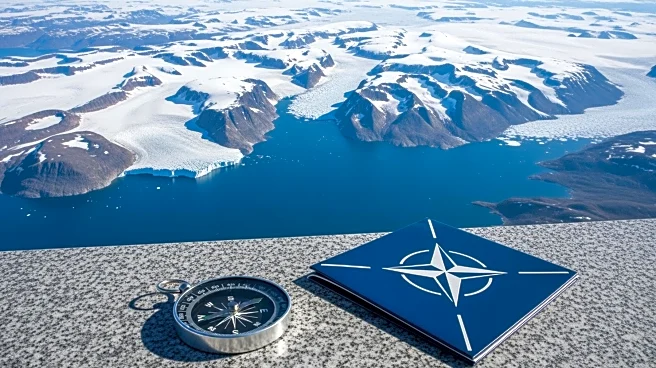
Tommy Pigott, the principal deputy spokesperson at the State Department, has indicated that the acquisition of Greenland by the United States could potentially enhance security for NATO. This statement
comes amid ongoing discussions and tensions between the U.S. and its NATO allies regarding the strategic importance of Greenland. The island, which is an autonomous territory of Denmark, has been a point of interest due to its strategic location and natural resources. The U.S. has previously expressed interest in Greenland, citing its potential to bolster defense capabilities and provide a strategic advantage in the Arctic region.
Why It's Important?
The potential acquisition of Greenland by the U.S. could have significant implications for international relations and security dynamics within NATO. Greenland's strategic location in the Arctic makes it a valuable asset for military and economic reasons. If the U.S. were to acquire Greenland, it could strengthen its position in the Arctic, a region that is becoming increasingly important due to climate change and the opening of new shipping routes. This move could also shift the balance of power within NATO, potentially leading to tensions with other member countries who may view the acquisition as a unilateral action by the U.S. Furthermore, the acquisition could impact U.S.-Denmark relations, as Denmark currently oversees Greenland's foreign affairs and defense.
What's Next?
If the U.S. pursues the acquisition of Greenland, it will likely involve complex negotiations with Denmark and Greenland's local government. The process would require addressing legal, political, and economic considerations, as well as gaining support from NATO allies. The U.S. may also need to engage in diplomatic efforts to reassure other NATO members of its intentions and the benefits of such an acquisition for collective security. Additionally, the U.S. would need to consider the perspectives and rights of Greenland's indigenous population, who may have concerns about sovereignty and self-determination.