




What's Happening?
Congressman Troy A. Carter, Sr. (D-LA) and Congressman Jared Moskowitz (D-FL), co-chairs of the Disaster Preparedness and Recovery Caucus, have introduced the Emergency Preparedness in Higher Education Act. This legislation proposes to authorize $100
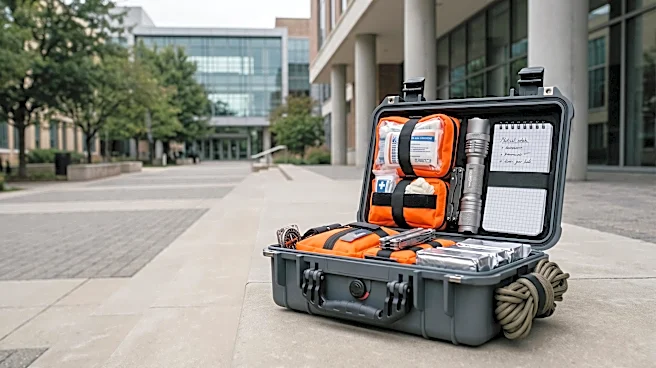
million in annual federal funding for the Federal Emergency Management Agency (FEMA). These funds would be distributed as grants to higher education institutions to improve their capacity, planning, and facilities for preparing for and responding to disasters and other emergencies. The initiative stems from the recognition of increased extreme weather events due to climate change and the vulnerability of college campuses, as evidenced by past events like Hurricanes Katrina, Ida, and Irma, and various campus shootings. The grants aim to protect students, administrators, and staff by enhancing emergency management plans, infrastructure, and interagency coordination.
Why It's Important?
This legislation is crucial for enhancing the safety and resilience of higher education institutions across the U.S. Colleges and universities, often functioning as small communities, are uniquely susceptible to a range of natural disasters and other emergencies, including active threats. The proposed annual federal funding of $100 million through FEMA grants would provide much-needed resources for institutions to develop comprehensive emergency plans, upgrade facilities, and improve communication systems. This proactive approach is vital for protecting the lives and well-being of tens of thousands of students, staff, and researchers, particularly those who live on campus, including international students, students with disabilities, and low-income students. By investing in preparedness, the act aims to minimize disruptions to academic and research missions, limit financial impacts, and ensure that campuses can effectively respond to crises before they escalate.
What's Next?
The Emergency Preparedness in Higher Education Act will now proceed through the legislative process, requiring consideration and potential approval by Congress. If passed, FEMA would be tasked with establishing the grant program and developing guidelines for eligible higher education institutions to apply for funding. Institutions would then be able to utilize these grants for various purposes, including personnel costs for emergency preparedness, creating or updating emergency management plans, improving infrastructure for emergency operations centers, and acquiring equipment and technology for enhanced interagency coordination. The implementation of this act would likely lead to a significant improvement in disaster readiness across U.S. college campuses, potentially influencing how higher education institutions integrate emergency planning into their core operations and infrastructure development.
Beyond the Headlines
Beyond the immediate benefits of enhanced disaster preparedness, this legislation highlights a broader recognition of the evolving threats faced by educational institutions, from climate-related disasters to acts of violence. It underscores a shift towards proactive risk management and resilience-building within the higher education sector. The act also implicitly acknowledges the 'duty of care' that institutions have towards their students, particularly those who are most vulnerable. Furthermore, by linking federal funding to emergency preparedness, the legislation could encourage a more standardized and robust approach to safety protocols across diverse campuses, fostering a culture of readiness. This initiative could also spur innovation in emergency management technologies and practices, as institutions seek to optimize their use of grant funds to protect their communities.