




What's Happening?
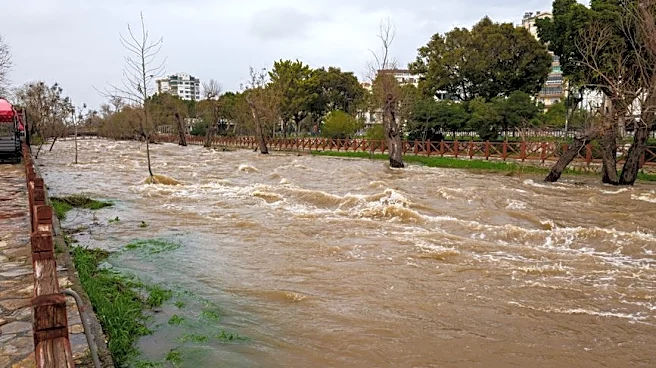
The flood risk in Des Moines has significantly decreased following recent heavy rains, with the Raccoon River now projected to crest at a lower level than initially anticipated. Des Moines Water Works crews had closed and sandbagged the flood gates at the Water Treatment
Plant on Fleur Drive on Wednesday, a measure not taken for flood risk since 2019. The initial forecast predicted the Raccoon River would crest at over 17 feet, which would have led to flooding on Fleur Drive and potentially reached the treatment plant levee. However, the latest forecast indicates a crest of approximately 15 feet. Kyle Danley, chief operating officer of Des Moines Water Works, stated that while the situation is improved, the area is not entirely out of danger. Fleur Drive is expected to remain open due to the reduced flood risk, though sandbags and flood gates will stay in place as a precaution. Emergency managers noted that much of the heavy rainfall bypassed the Des Moines area, falling to the north and south, which contributed to the reduced risk for homeowners.
Why It's Important?
This reduction in flood risk is crucial for the infrastructure and residents of Des Moines. A lower crest for the Raccoon River means that critical transportation arteries like Fleur Drive are likely to remain open, preventing significant disruptions to daily commutes and commerce. The protection of the Water Works treatment plant is paramount, as its flooding would severely impact the city's water supply and public health. The fact that heavy rains largely missed the immediate Des Moines area has averted potential residential problems, saving homeowners from property damage and displacement. This situation highlights the importance of proactive flood mitigation measures, such as the deployment of flood gates and sandbags, which were ready to respond to the initial, higher flood predictions. The improved outlook also reduces the strain on emergency services and local government resources that would otherwise be dedicated to managing a more severe flood event.
What's Next?
Despite the improved forecast, the Raccoon River is still expected to reach about 15 feet by Saturday morning, which is above the flood stage of 12 feet. This means that some low-lying areas around the Des Moines metropolitan area may still experience minor flooding. Officials are monitoring the situation closely, as heavy rain that fell north of Des Moines in the Raccoon River basin is still draining and could take a day or more to flow downstream into the area. The flood gates and sandbags at the Water Works treatment plant will remain in place as a precautionary measure. Residents in low-lying areas are advised to stay vigilant and be prepared for potential localized flooding. Emergency management agencies will continue to provide updates as river levels fluctuate and new information becomes available.
Beyond the Headlines
The incident underscores the increasing challenges faced by urban centers due to unpredictable weather patterns and the need for robust flood control infrastructure. While Des Moines was fortunate this time, the initial high flood predictions serve as a reminder of the constant threat posed by climate-related events. The decision to close flood gates and deploy sandbags, even when the threat later diminished, highlights a cautious and proactive approach to disaster preparedness. This event could prompt further discussions on long-term flood resilience strategies, including investments in upgraded infrastructure, improved early warning systems, and urban planning that considers future climate scenarios. It also emphasizes the interconnectedness of regional weather systems, as rainfall in areas upstream significantly impacts downstream communities, necessitating broader regional cooperation in water management.