

What's Happening?
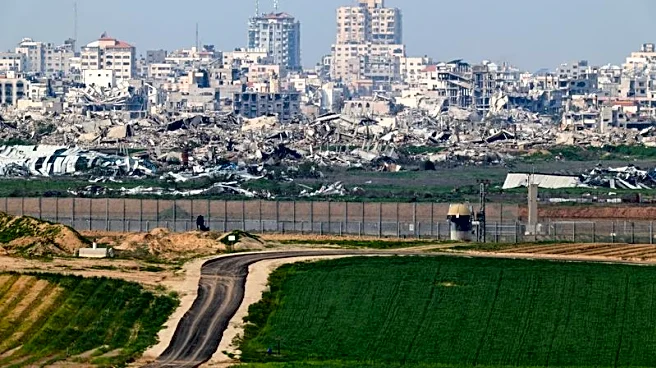
Bangladesh has indicated its willingness to join an international stabilization force in Gaza, as stated by its national security adviser, Khalilur Rahman, during a meeting with U.S. diplomats in Washington. This development follows a UN Security Council
resolution authorizing the establishment of a temporary force in Gaza, where a ceasefire began in October. The force's purpose is to oversee the ceasefire with Hamas, although the truce has not advanced beyond its initial phase. A closed-door meeting in Doha, convened by U.S. Central Command, saw representatives from about 45 countries discussing the potential force. Bangladesh, along with other countries like Indonesia, Azerbaijan, and Pakistan, has shown interest in contributing troops, funding, or logistical support. The U.S. State Department has not commented on Bangladesh's announcement.
Why It's Important?
The involvement of Bangladesh in the international stabilization force could significantly impact the geopolitical dynamics in the Middle East. By participating, Bangladesh aligns itself with international efforts to stabilize Gaza, potentially enhancing its diplomatic relations with the U.S. and other Western nations. The stabilization force aims to maintain peace and prevent further conflict in the region, which is crucial for regional stability. The participation of multiple countries indicates a collective international effort to address the ongoing conflict between Israel and Hamas. However, the absence of a clear mandate and structure for the force raises questions about its effectiveness and the commitment of participating countries.
What's Next?
Further meetings are expected to refine the structure and mandate of the stabilization force. The U.S. is in discussions with 15 to 20 countries to assess their commitment levels. The European Union has proposed expanding training programs for Palestinian police, which could be integrated into the stabilization efforts. The outcome of these discussions will determine the force's composition and operational strategy. Additionally, internal discussions within Israel regarding the governance of Gaza post-conflict continue, with differing views on the role of the international force versus Israeli military operations.