





What's Happening?
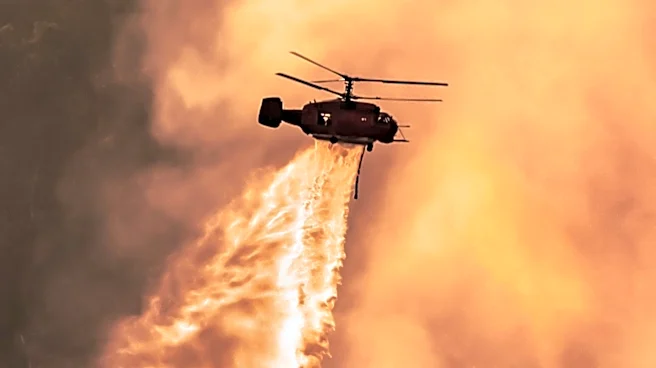
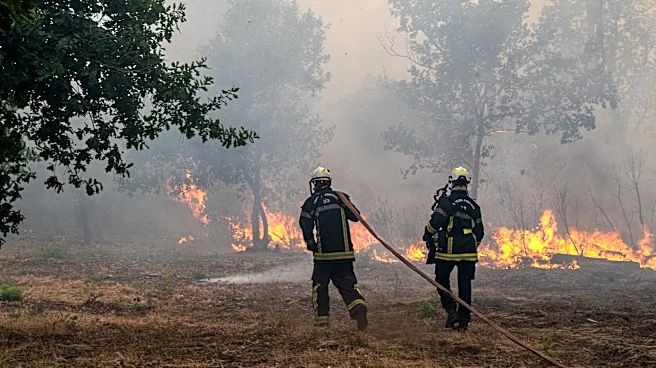
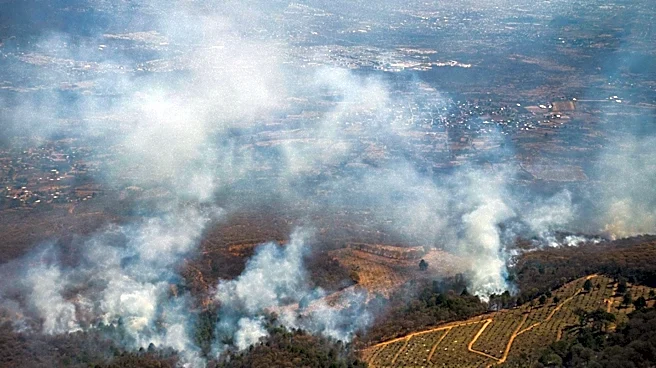
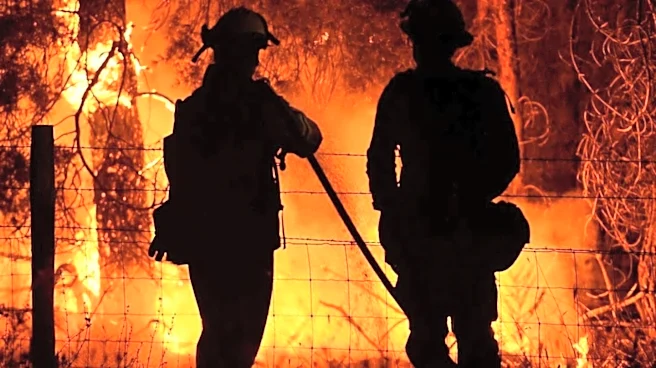
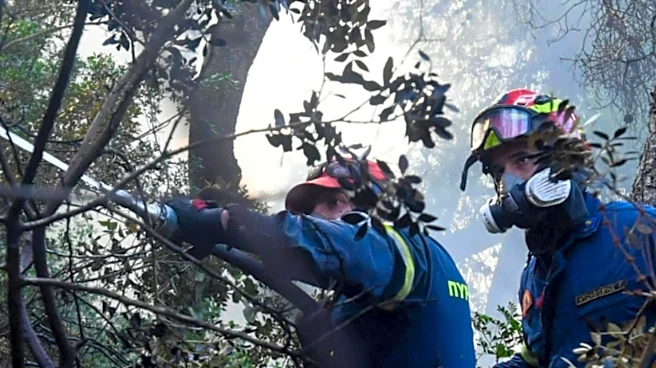
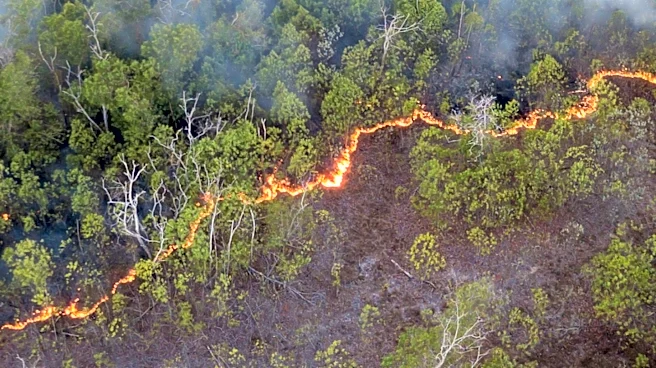
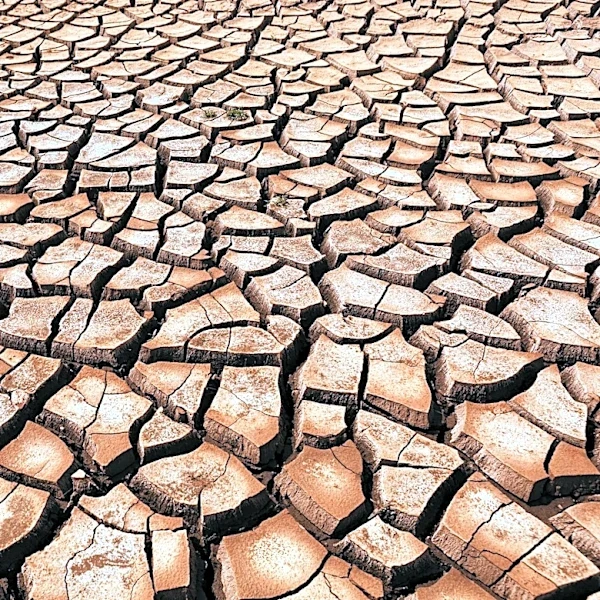
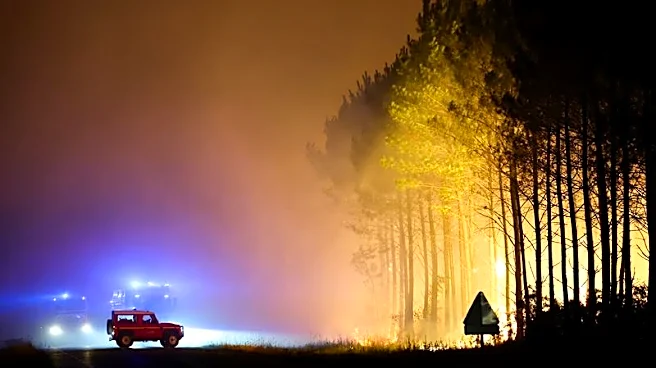
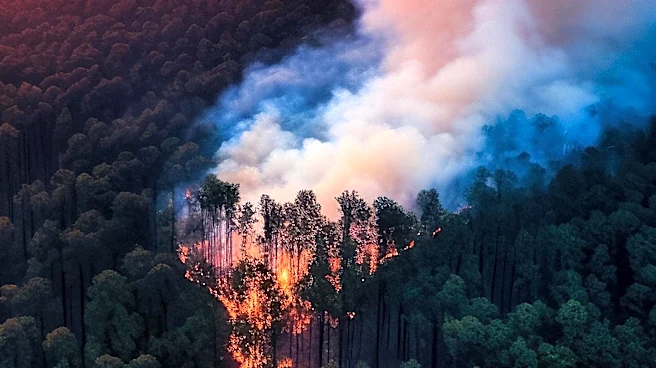
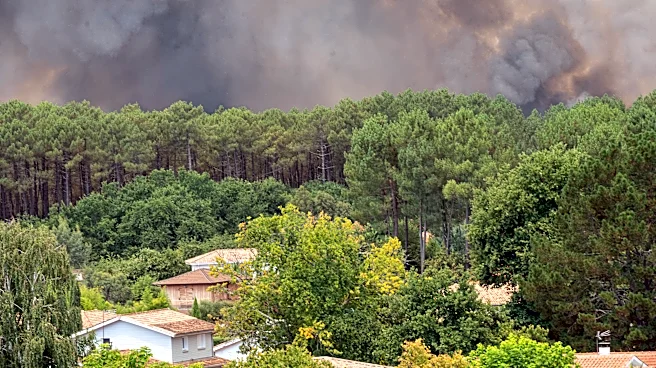
France is experiencing catastrophic wildfires that have led to the evacuation of over 260,000 people, primarily in the southwestern region of Gironde near Bordeaux. The fires, which began in mid-July, have been exacerbated by extreme heat, dry conditions,
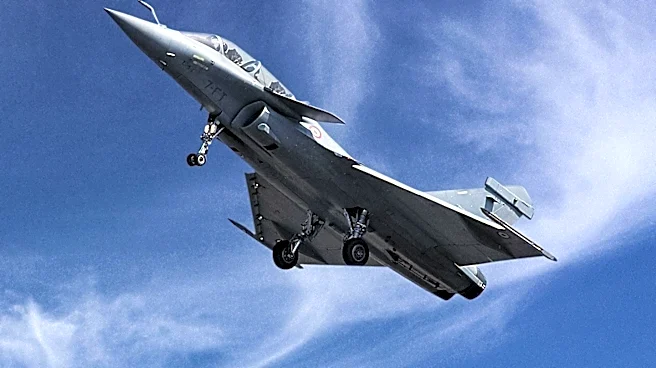
and high winds. French Prime Minister Sébastien Lecornu has described the situation as unprecedented, with the fires reaching levels never seen before. In response, the French government has doubled its military deployment to over 1,000 soldiers to assist in firefighting efforts. Additionally, an A400M cargo aircraft has been deployed to drop retardant on the flames. European countries, including Romania, Croatia, and Germany, have sent personnel and equipment to aid France in combating the wildfires.
Why It's Important?
The wildfires in France highlight the increasing frequency and intensity of natural disasters linked to climate change. The situation underscores the need for international cooperation in disaster response and the importance of addressing climate change to prevent such events. The fires have significant implications for public safety, environmental health, and economic stability in the affected regions. The deployment of military resources and international aid reflects the severity of the crisis and the challenges faced by governments in managing large-scale natural disasters.
What's Next?
The French government has scheduled an emergency cabinet meeting to discuss further measures. Authorities are closely monitoring weather conditions, hoping for lighter winds and rainfall to aid containment efforts. The situation remains dynamic, with ongoing evacuations and firefighting operations. The international community's response and the effectiveness of current measures will be critical in managing the crisis and preventing further damage.
Beyond the Headlines
The wildfires in France may prompt a reevaluation of national and international policies on climate change and disaster preparedness. The crisis could lead to increased investment in firefighting resources and infrastructure, as well as a push for more aggressive climate action. The situation also raises ethical questions about the responsibility of developed nations to lead in climate change mitigation and support vulnerable regions facing similar challenges.