



What's Happening?
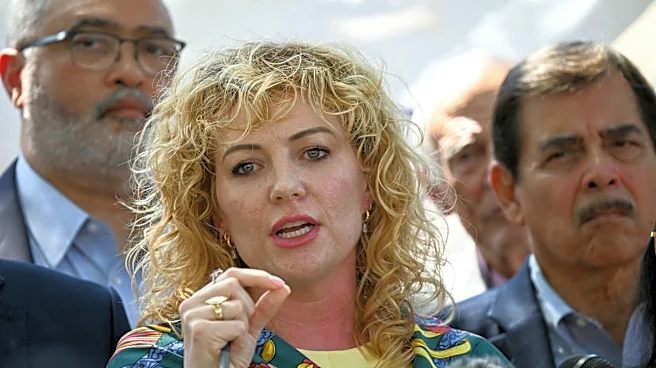
Indian-American Congresswoman Pramila Jayapal, alongside Representatives Rashida Tlaib and Ayanna Pressley, and Senators Edward Markey and Jeff Merkley, have reintroduced the Facial Recognition and Biometric Technology Moratorium Act. This legislation
aims to prohibit federal agencies from utilizing facial recognition and other biometric surveillance technologies, which identify individuals through physical characteristics like faces, voices, or gait. The proposed ban would remain in effect unless overturned by a subsequent act of Congress. Lawmakers highlighted that the measure is a direct response to the increasing government deployment of biometric technology, citing its use by agencies such as Immigration and Customs Enforcement (ICE) and Customs and Border Protection (CBP) to target immigrants, protesters, and various communities across the country. The bill also seeks to prevent federal funds from being used to acquire or operate these surveillance systems and would tie certain federal grants for state and local law enforcement to the adoption of similar moratoriums. Information collected in violation of this proposed law would be inadmissible in judicial proceedings, and individuals whose biometric data was unlawfully used could pursue legal action.
Why It's Important?
The reintroduction of this bill is significant for civil liberties and privacy rights in the United States. It addresses growing concerns about the potential for a national surveillance state and the disproportionate impact of facial recognition technology on minority communities. Research cited by the lawmakers indicates that nearly half of American adults' faces are already in facial-recognition databases, and Black, Brown, and Asian individuals are up to 100 times more likely to be misidentified by these algorithms compared to white men. This raises critical questions about accuracy, bias, and the potential for wrongful arrests or targeting based on flawed technology. The legislation's provisions, such as prohibiting the use of unlawfully collected biometric information in court and allowing private legal actions, aim to establish stronger protections for individuals. Furthermore, linking federal grants to state and local moratoriums could encourage a more uniform approach to regulating this technology across different jurisdictions, which currently have varied rules regarding its use by police and other government bodies.
What's Next?
The Facial Recognition and Biometric Technology Moratorium Act, having been reintroduced in both the House and Senate, must now navigate the legislative process. For it to become law, it needs to pass both chambers in identical form before being sent to the President for approval. The reintroduction signals a continued push by a coalition of lawmakers and civil liberties organizations, including the American Civil Liberties Union and the Electronic Frontier Foundation, to regulate biometric surveillance. The debate surrounding this bill will likely involve discussions on national security, law enforcement capabilities, individual privacy, and technological ethics. Stakeholders, including federal agencies, tech companies, and civil rights advocates, will closely monitor and engage with the legislative process, potentially leading to further public discourse and amendments as the bill progresses through Congress. The outcome will determine the future scope of biometric technology use by government entities in the U.S.
Beyond the Headlines
Beyond the immediate legislative implications, this bill touches upon deeper societal and ethical considerations regarding the balance between security and privacy in an increasingly digital world. The concerns about racial bias in facial recognition algorithms highlight systemic issues within technology development and deployment, where existing societal inequalities can be amplified by new tools. The push for a moratorium reflects a broader societal reckoning with the implications of pervasive surveillance, particularly its potential to erode democratic freedoms and disproportionately affect vulnerable populations. The lack of a comprehensive federal statute governing facial recognition technology in the U.S. underscores a regulatory gap that this bill attempts to address. Its passage could set a precedent for how emerging technologies are governed, emphasizing a precautionary approach when their societal impacts are not fully understood or when they pose significant risks to civil liberties. This legislative effort could also spur further innovation in privacy-preserving technologies and encourage more ethical considerations in the design and application of AI and biometric systems.