






What's Happening?
The World Bank's private lending arm, the International Finance Corp. (IFC), has withdrawn a $20 million loan intended for Brazil’s Grupo Agronorte. This decision came after significant pressure from a coalition of environmental groups and the Indigenous
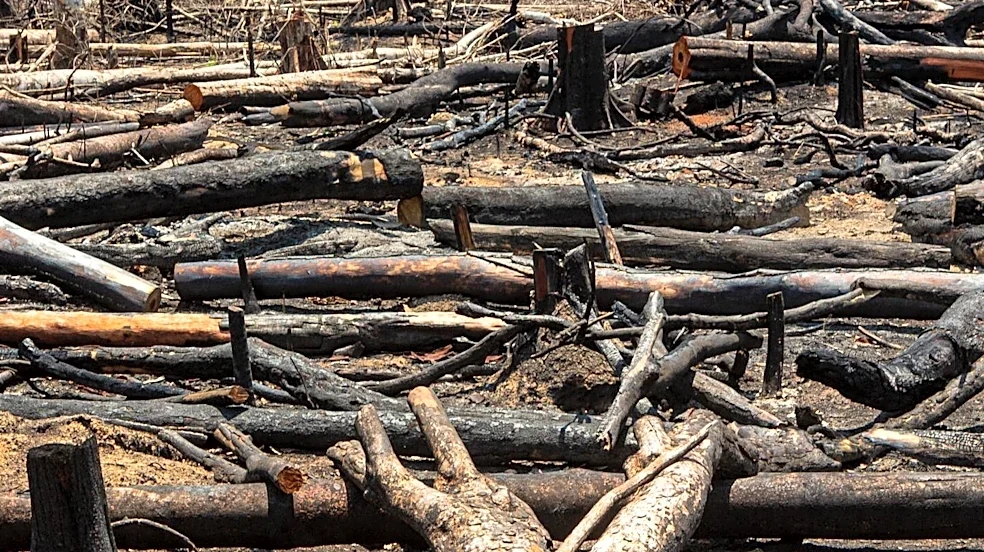
Apinajé community, who argued that the agribusiness was linked to deforestation in the Amazon and Cerrado regions. The Stop Financing Factory Farming coalition, comprising over 100 advocacy and Indigenous groups, wrote to the IFC in May, urging the cancellation of the loan. The groups highlighted that Agronorte's founder and majority owner, Gilmar Gonçalves Carvalho, faces a federal lawsuit in Brazil for illegally cutting down nearly 5,000 acres of rainforest. The IFC has not publicly commented on the withdrawal but has removed the Agronorte loan from its disclosure portal.
Why It's Important?
This withdrawal marks a significant victory for environmental and Indigenous rights advocates, demonstrating the impact of sustained pressure on international financial institutions. It underscores the growing scrutiny faced by development banks regarding their investments in projects with potential environmental and social harms, particularly those contributing to deforestation and climate change. For the U.S., this event highlights the interconnectedness of global environmental issues and financial accountability. U.S.-based environmental organizations often play a role in these international coalitions, influencing the lending practices of institutions like the World Bank, which receives funding from member countries, including the U.S. This outcome could encourage greater due diligence from financial institutions worldwide and empower other communities and advocacy groups to challenge environmentally damaging investments, potentially shifting global investment patterns towards more sustainable practices.
What's Next?
The Stop Financing Factory Farming coalition plans to continue monitoring other proposed loans by the IFC, including a $150 million loan to New Hope Singapore Pte. Ltd. and a $100 million loan to Brazil’s Agrícola Alvorada, both of which are linked to animal feed production and potential deforestation. This suggests ongoing vigilance and advocacy efforts will be a key next step for these groups. Development banks, including the World Bank, may face increased pressure to align their investment portfolios more closely with climate goals and social responsibility standards. This could lead to stricter environmental and social safeguards for future projects and potentially a re-evaluation of their overall investment strategies in sectors like industrial agriculture. The incident also sets a precedent for how Indigenous communities and environmental activists can successfully challenge large financial institutions.
Beyond the Headlines
The withdrawal of the Agronorte loan illuminates a deeper tension between economic development goals and environmental protection, particularly in ecologically sensitive regions like the Amazon. It highlights the ethical dilemma faced by development banks that aim to alleviate poverty and foster economic growth while simultaneously needing to address climate change and biodiversity loss. The case also brings to light the complex issue of supply chain transparency, as Agronorte reportedly lacked systems to ensure its soybeans were not sourced from illegally deforested land. This raises questions about the responsibility of financial institutions to ensure the ethical sourcing practices of their beneficiaries. Furthermore, the success of the advocacy groups underscores the increasing power of civil society and Indigenous communities in shaping global financial decisions, pushing for a more equitable and sustainable development paradigm.