





What's Happening?
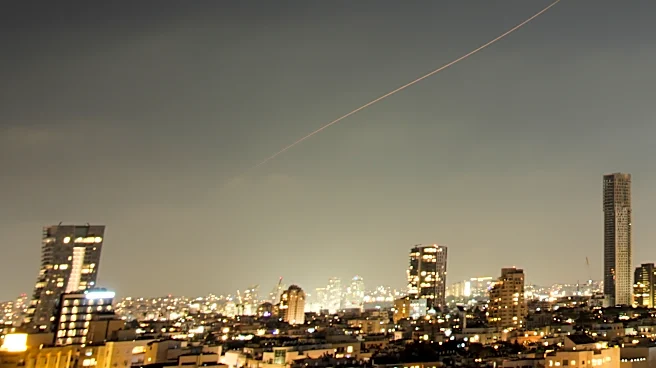
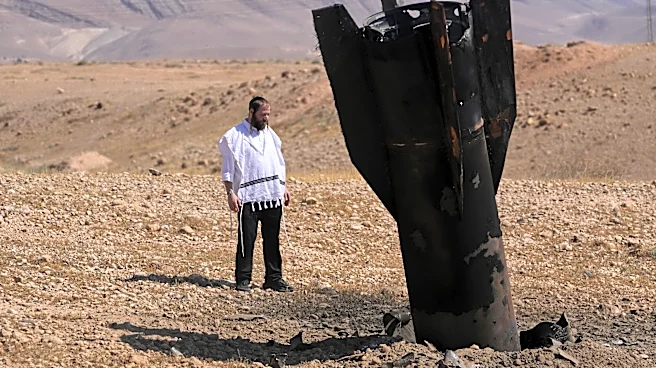
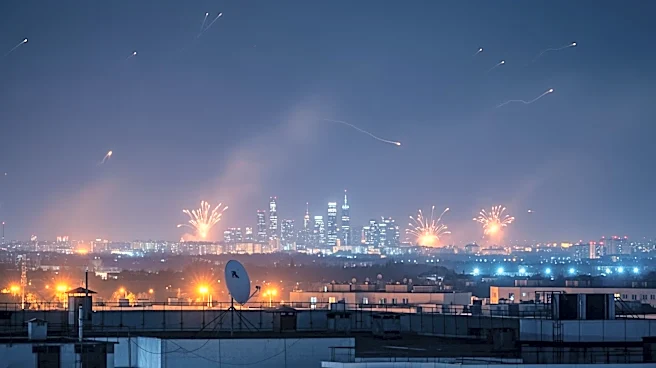
President Donald Trump has urged Israeli Prime Minister Benjamin Netanyahu to refrain from retaliating against Iran following a recent missile exchange. This development comes after Iran launched missile barrages at northern Israel, which were intercepted
by the Israeli Defense Forces. The attack was a response to an earlier Israeli strike on a Hezbollah stronghold in Beirut. Trump emphasized the importance of restraint, suggesting that both sides had already made their points and further escalation was unnecessary. He indicated that a U.S.-negotiated cease-fire was close to being finalized, and any further military actions could jeopardize the potential agreement. Trump also mentioned the possibility of deploying U.S. troops if negotiations fail, highlighting the seriousness of the situation.
Why It's Important?
The situation underscores the delicate balance of power in the Middle East and the role of the United States in mediating conflicts in the region. A successful cease-fire could prevent further escalation and stabilize the region, which is crucial for global security and economic stability. The U.S. has significant strategic interests in the Middle East, and maintaining peace is vital for protecting these interests. The potential deployment of U.S. troops also highlights the high stakes involved and the lengths to which the U.S. might go to ensure a resolution. The outcome of these negotiations could have far-reaching implications for U.S. foreign policy and its relationships with key allies and adversaries in the region.
What's Next?
If the cease-fire is successfully negotiated, it could lead to a de-escalation of tensions and a more stable geopolitical environment in the Middle East. However, if negotiations fail, the U.S. might consider military intervention, which could lead to a broader conflict. The international community will be closely watching the developments, and any agreement will likely involve significant diplomatic efforts from multiple stakeholders. The response from Iran and Israel will be critical in determining the next steps, as both countries have expressed strong positions on the issue.