



What's Happening?
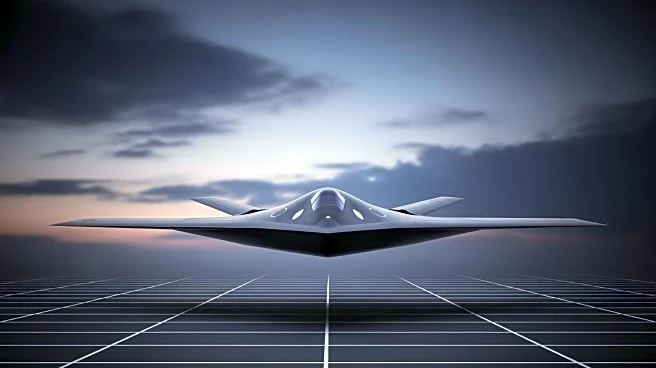
China is advancing its military aviation capabilities with the development of the JH-XX, a new strategic stealth bomber. This aircraft is designed to complement the existing H-20 bomber and represents a significant leap in Chinese aviation technology.
The JH-XX features a tailless design, stealth capabilities, and a modified delta wing, which are intended to enhance its ability to penetrate dense anti-access/area denial (A2/AD) networks. The aircraft's development has been noted in the Pentagon's annual report on China's military power, highlighting its potential to challenge U.S. air dominance in the region. The JH-XX is expected to replace the aging H-6 bomber fleet, which has been in service for over half a century. Despite the advancements, there is ongoing debate among analysts about whether the JH-XX is a production-ready airframe or merely an experimental technology demonstrator.
Why It's Important?
The development of the JH-XX bomber is significant as it underscores China's growing military capabilities and its strategic intent to enhance its regional and global reach. For the United States, this development poses a potential challenge to its air superiority, particularly in the Asia-Pacific region. The JH-XX's ability to penetrate A2/AD networks could complicate U.S. military operations and necessitate adjustments in defense strategies. Additionally, the introduction of such advanced aircraft could influence the balance of power in the region, prompting neighboring countries to reassess their own defense postures. The U.S. and its allies may need to invest in countermeasures and advanced technologies to maintain their strategic advantage.
What's Next?
As China continues to develop the JH-XX, the U.S. and its allies will likely monitor its progress closely. Future developments may include further test flights and potential integration into the People's Liberation Army Air Force (PLAAF). The U.S. may respond by enhancing its own stealth and anti-stealth capabilities, as well as strengthening alliances in the Asia-Pacific region. Diplomatic efforts may also be intensified to address the growing military capabilities of China and to ensure regional stability. The international community will be watching closely to see how this development affects geopolitical dynamics and military strategies.
Beyond the Headlines
The JH-XX's development raises questions about the ethical and strategic implications of military advancements. The potential for increased military tensions in the Asia-Pacific region could lead to an arms race, with countries investing heavily in advanced technologies to counter perceived threats. This could divert resources from other critical areas such as economic development and social welfare. Additionally, the focus on military capabilities may impact diplomatic relations, as countries navigate the complexities of maintaining peace while preparing for potential conflicts. The long-term implications of such developments could reshape global power structures and influence international relations.