





What's Happening?
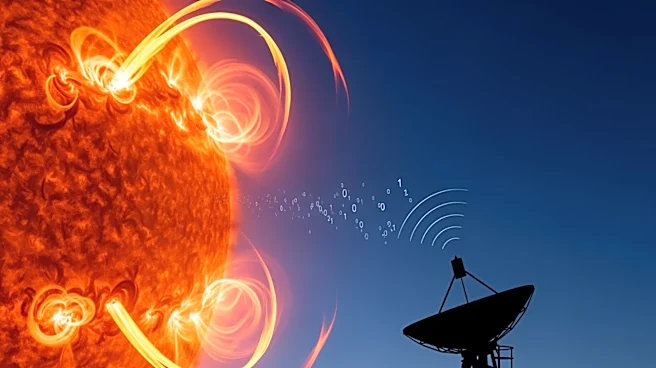
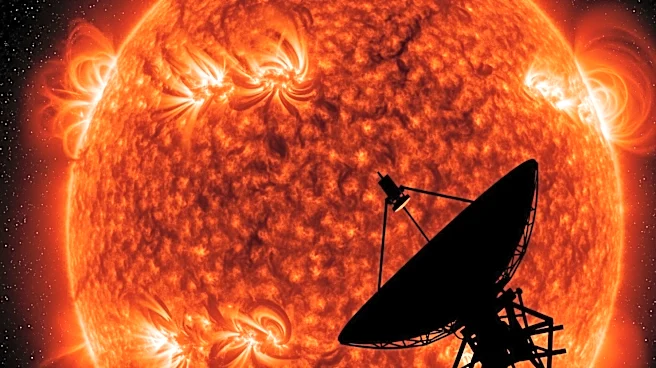
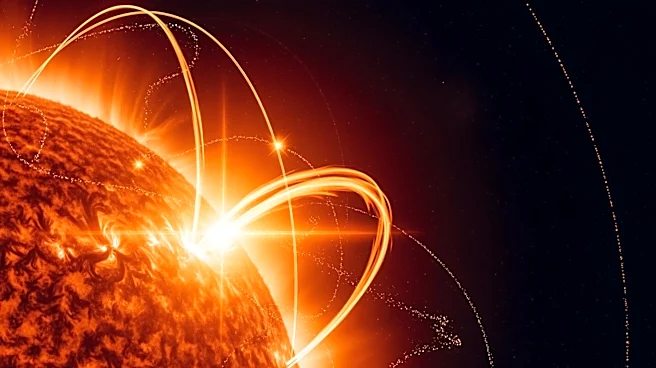
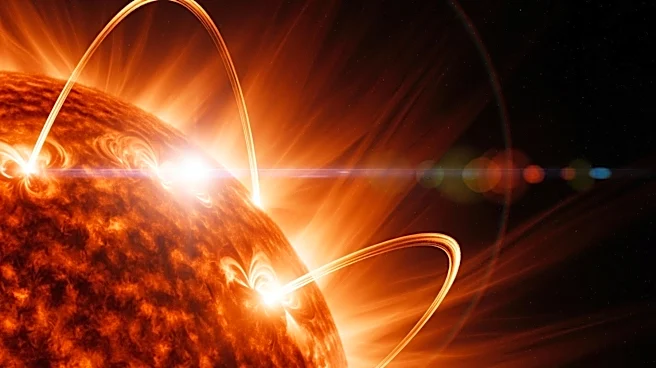
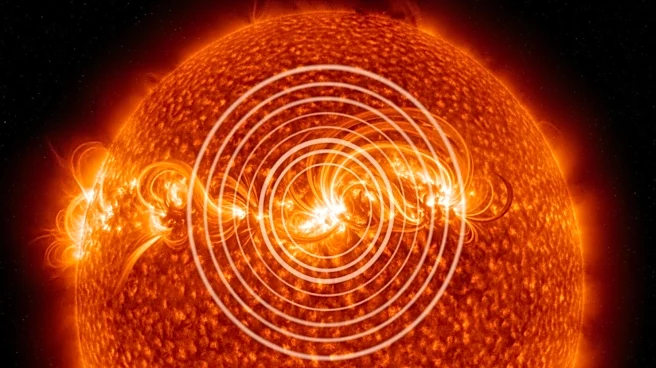
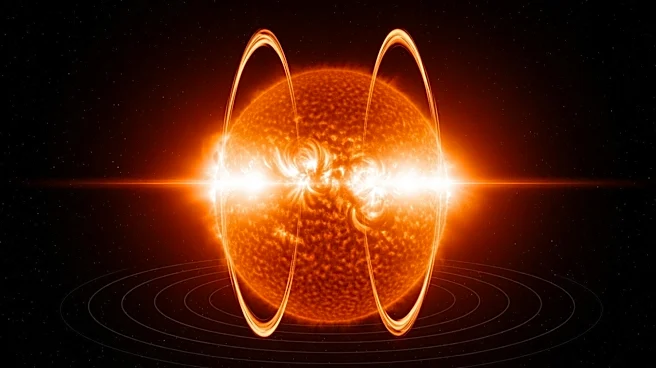
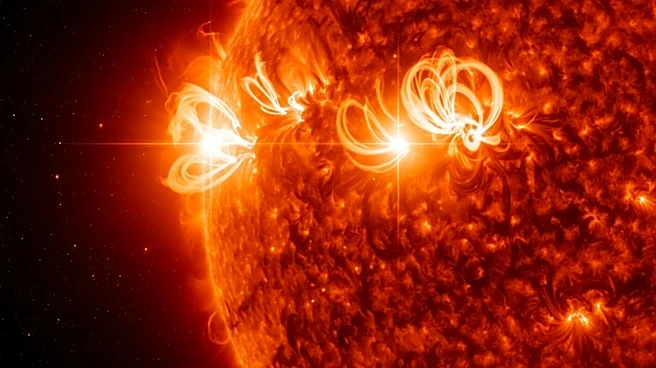
NASA has reported that two intense solar flares erupted within seven hours, causing radio blackouts across parts of Earth. These X-class flares, the most intense classification, peaked on April 23 and 24, impacting regions including the Pacific Ocean,
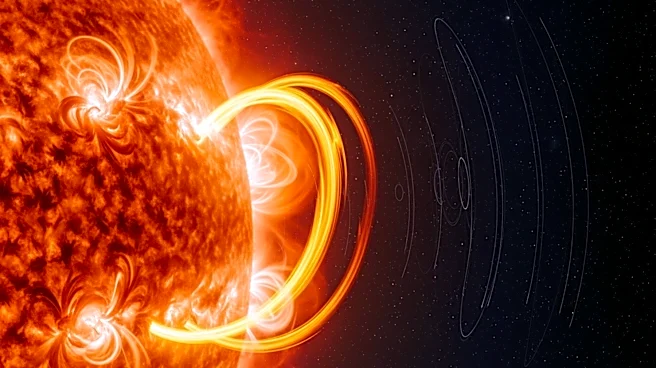
Australia, and East Asia. The flares were accompanied by coronal mass ejections (CMEs), large explosions of plasma and magnetic fields from the sun. Although the CMEs are not expected to directly hit Earth, a glancing blow could trigger geomagnetic storms and aurora displays. These flares are the strongest observed in 78 days, highlighting the sun's ongoing activity.
Why It's Important?
Solar flares can have significant implications for Earth's technological infrastructure. The recent flares disrupted radio communications, which are critical for navigation, emergency services, and global connectivity. Such disruptions can affect aviation, maritime operations, and military communications. Additionally, solar flares pose risks to satellites and astronauts, potentially damaging equipment and endangering missions. Understanding and predicting solar activity is crucial for preparing and mitigating these impacts, ensuring the resilience of technological systems and the safety of space operations.
What's Next?
Scientists will continue to monitor solar activity to predict future flares and CMEs. Improved forecasting models can help mitigate the effects of solar storms by providing advance warnings to industries and governments. This allows for protective measures, such as adjusting satellite orbits and securing power grids. Ongoing research into solar dynamics will enhance understanding of these phenomena, contributing to better preparedness and response strategies. Collaboration between space agencies and scientific communities will be essential in addressing the challenges posed by solar activity.