



What's Happening?
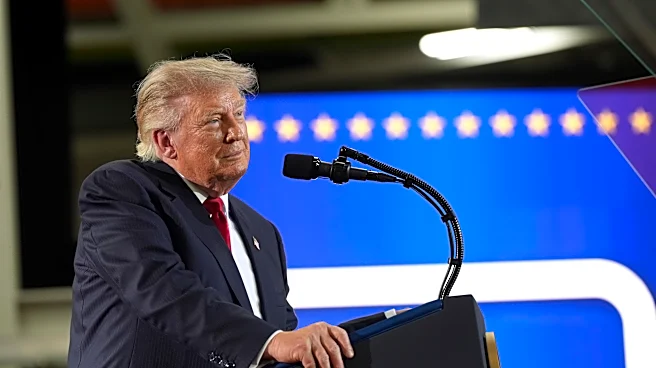
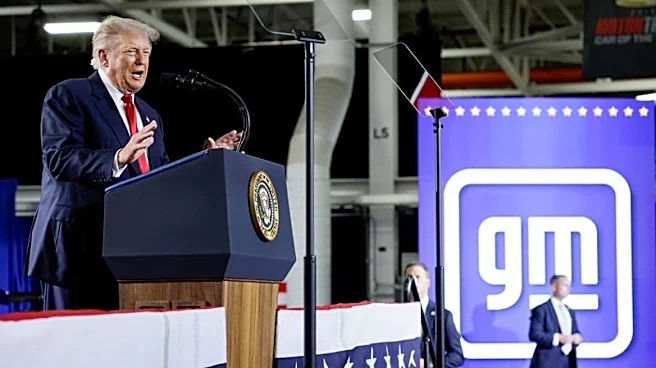
During a visit to General Motors' Milford Proving Ground in Michigan, President Trump claimed that his tariffs have revived American car production, stating, 'I've done more for you than your parents.' Despite these claims, Michigan lost approximately
4,000 auto parts jobs in the year ending June 2026. Trump's 25% tariff on foreign automobiles was credited with a 20% increase in GM's truck and SUV production. However, the broader impact on Michigan's automotive employment remains mixed, with vehicle manufacturing adding some jobs but not offsetting parts-sector losses.
Why It's Important?
President Trump's claims about the positive impact of tariffs on American car production highlight the ongoing debate over trade policies and their effects on domestic industries. While tariffs may have boosted certain sectors, the overall job losses in Michigan's auto parts industry suggest a more complex economic picture. The mixed results raise questions about the effectiveness of tariffs as a tool for economic growth and job creation. The political implications of these developments are significant, as they may influence voter perceptions and impact upcoming elections.
What's Next?
The mixed economic outcomes in Michigan may prompt further analysis and debate over the long-term effects of tariffs on the U.S. automotive industry. Policymakers and industry leaders may need to consider alternative strategies to support job growth and economic stability. The political landscape in Michigan and other key states could be influenced by these economic developments, potentially affecting future elections and policy decisions. Stakeholders will be closely monitoring the situation to assess the impact on their operations and strategic planning.