


What's Happening?
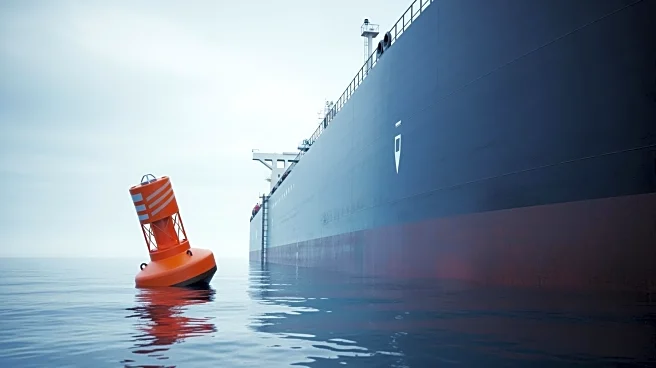
Malaysian authorities have fined two tankers involved in unauthorized ship-to-ship (STS) oil transfers within Malaysia's Exclusive Economic Zone (EEZ). The tankers, the stateless Nora and the Cameroon-flagged Rcelebra, were caught transferring Iranian
crude oil 24 nautical miles off Penang's coast. The Malaysian Maritime Enforcement Agency detained the crews and initially announced the seizure of the cargo. However, both vessels were released after paying a $76,000 bond, the maximum penalty under Malaysian maritime law for unauthorized STS transfers. The Nora has since headed back towards Iran, while the Rcelebra remains anchored off Johore. This incident highlights Malaysia's enforcement of its maritime safety and environmental ordinances, although it does not enforce international sanctions or International Maritime Organization (IMO) decisions on STS activities.
Why It's Important?
The incident underscores the complexities of international maritime law enforcement, particularly in regions where multiple jurisdictions and international sanctions intersect. Malaysia's decision to fine rather than seize the tankers reflects its focus on enforcing national laws over international sanctions. This approach may impact global oil markets, as the STS transfers involve significant volumes of Iranian crude oil destined for China. The situation also highlights the challenges faced by countries in balancing national interests with international obligations, especially in areas like maritime safety and environmental protection. The increase in STS activity off Malaysia, as reported by the United Against Nuclear Iran organization, suggests a growing trend that could have broader implications for regional maritime security and environmental policies.
What's Next?
The Malaysian Maritime Enforcement Agency may continue to monitor and regulate STS activities within its EEZ, potentially leading to more fines or enforcement actions against unauthorized transfers. The international community, including the U.S., UK, EU, and UN, may respond by increasing diplomatic pressure on Malaysia to align its enforcement actions with international sanctions. Additionally, the ongoing STS activities could prompt discussions on strengthening international maritime laws and cooperation to address the challenges posed by such operations. Stakeholders, including environmental groups and maritime safety organizations, may advocate for stricter regulations to prevent potential environmental risks associated with these transfers.
Beyond the Headlines
The situation raises ethical and legal questions about the enforcement of international sanctions and the role of national authorities in regulating activities within their jurisdictions. The reliance on fines rather than more severe penalties may be seen as a pragmatic approach by Malaysia, balancing economic interests with regulatory responsibilities. However, this could set a precedent for other countries facing similar challenges, potentially undermining the effectiveness of international sanctions. The incident also highlights the need for clearer international guidelines and cooperation to address the complexities of STS transfers and their implications for global oil markets and environmental protection.