





What's Happening?
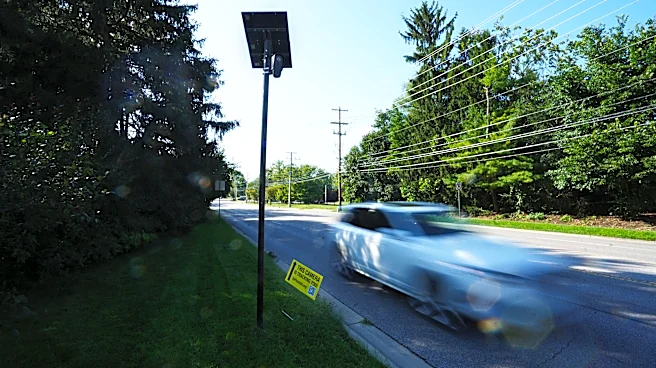
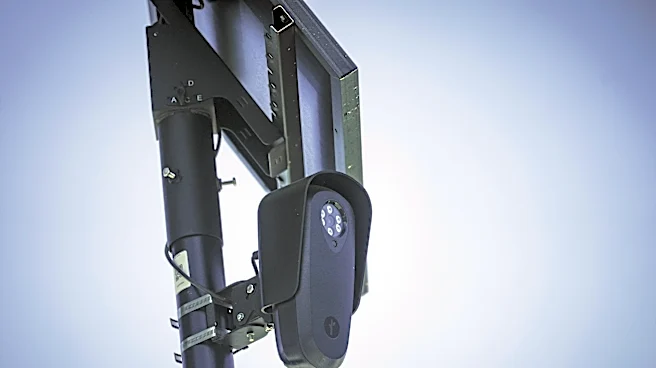
The arrests of former Savannah Police Department employees for allegedly misusing Flock Safety license plate reader data have reignited the debate over digital privacy and surveillance technology in Georgia. Three former officers face charges of violating
their oaths of office and misusing the system, while a former civilian specialist is charged with two counts of misuse. These allegations were uncovered through an internal audit by the department. This incident follows a similar case in Albany, where five former officers were arrested in July for unauthorized searches of Flock data. These events have raised concerns about law enforcement personnel using surveillance databases for personal reasons rather than legitimate investigations. Under Georgia law, accessing license plate reader records for non-law-enforcement purposes is classified as a high and aggravated misdemeanor.
Why It's Important?
The ongoing misuse of surveillance technology by law enforcement in Georgia highlights a critical gap in the state's digital privacy protections. Civil liberties advocates, such as Nora Benavidez, digital justice director at Free Press, argue that Georgia lacks comprehensive safeguards for digital privacy, noting the absence of a dedicated privacy or digital rights section in the state code. This deficiency raises significant First and Fourth Amendment concerns regarding government access to private information without warrants. While law enforcement officials, including Lumpkin County Sheriff Stacy Jarrard and Georgia Attorney General Chris Carr, defend license plate readers as vital crime-fighting tools, the incidents in Savannah and Albany demonstrate the potential for abuse. The lack of robust legal frameworks leaves citizens vulnerable to unauthorized surveillance and data exploitation, impacting trust in law enforcement and potentially infringing on constitutional rights.
What's Next?
Following these incidents, Atlanta is auditing previous searches conducted using surveillance technology. Georgia officials are now confronted with the broader question of whether existing oversight mechanisms are sufficient or if stronger privacy laws are necessary. Public opposition to the widespread use of Flock cameras is growing, with activists like Kamau Franklin protesting for privacy rights. In response to increased scrutiny, Flock Safety has shortened its default data-retention period from 30 days to seven days, made search-audit tools mandatory, and now requires case codes for database queries. CEO Garrett Langley stated the company is setting a higher bar for itself and the industry. The coming period will likely see continued discussions and potential legislative efforts to address digital privacy concerns and regulate surveillance technology use in Georgia.
Beyond the Headlines
The debate surrounding surveillance technology in Georgia extends beyond immediate legal ramifications, touching upon fundamental ethical and societal implications. The incidents of misuse underscore the inherent tension between public safety and individual privacy rights in the digital age. The reliance on advanced surveillance tools, while touted as crime-fighting assets, introduces a slippery slope where data collected for one purpose can be diverted for personal or unauthorized uses. This raises questions about the accountability of those entrusted with powerful technologies and the adequacy of current legal frameworks to govern their deployment. The lack of comprehensive digital privacy laws in Georgia could set a precedent for other states, highlighting a broader national challenge in adapting legislation to rapid technological advancements. Ultimately, the outcome in Georgia could influence how other jurisdictions balance security needs with civil liberties in an increasingly monitored society.