



What's Happening?
Recent policy changes and funding cuts by the U.S. government are jeopardizing global polio eradication efforts, according to a report by the Global Polio Eradication Initiative (GPEI) Independent Monitoring Board (IMB). In 2025, the Trump administration
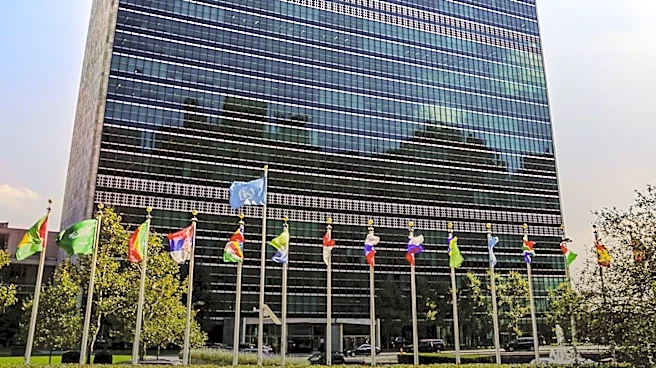
announced its intention to withdraw from the World Health Organization (WHO) and defund it, along with dismantling USAID and withdrawing from parts of the United Nations. These actions led to the evaporation of approximately $230 million dedicated to fighting global polio. Nicholas Enrich, then acting assistant administrator for global health at USAID, warned in a March 2025 memo that these cuts could lead to an additional 200,000 severe polio cases annually in the U.S., especially amid rising anti-vaccine sentiment. The Congressional Budget in April proposed nearly halving global health funding, specifically targeting Gavi, a key polio vaccine supplier. Although the State Department reinstated Gavi's funding in July 2025 due to bipartisan pushback, experts like Enrich believe it's unrealistic for new organizations to fill the void left by USAID and WHO. The IMB's September 2025 report concluded that certain polio variants are 'not under control' and labeled the funding cuts an 'existential threat' to a polio-free world. The number of wild polio viruses detected in 2025 was 60 percent higher than in 2019.
Why It's Important?
The U.S. government's policy shifts and funding reductions have significant implications for global public health and national security. Historically, organizations like WHO, CDC, and USAID have provided critical technical expertise and foundational funding for polio eradication programs worldwide. The withdrawal of U.S. support creates a substantial void, weakening the infrastructure necessary for surveillance, vaccination campaigns, and laboratory strengthening. This weakening of global health systems increases the risk of polio resurgence not only in endemic countries like Afghanistan and Pakistan but also in the U.S. Senator Jeanne Shaheen (D-NH) emphasized that unchecked polio spread abroad directly increases the risk of resurgence at home, putting American families at risk. The rise in vaccine-derived polio cases globally, including a case in New York, highlights the vulnerability of populations with declining vaccination rates. The shift from comprehensive global health strategies to bilateral agreements, as seen with the America First Global Health Strategy (AFGHS), may also prove less effective due to limited international participation and potentially discriminatory implementation, as exemplified by the agreement with Nigeria focusing on Christian populations. This fragmented approach undermines the coordinated global effort essential for eradicating a highly contagious disease like polio.
What's Next?
The immediate future will likely involve continued efforts by the Global Polio Eradication Initiative (GPEI) and its partners to mitigate the impact of U.S. funding cuts and policy changes. The reinstatement of Gavi's funding offers a partial reprieve, but the broader dismantling of USAID and withdrawal from WHO still leave significant gaps in global health infrastructure. Experts anticipate that the number of polio cases, particularly vaccine-derived ones, could continue to rise if these gaps are not adequately addressed. Policymakers will need to re-evaluate the effectiveness of the America First Global Health Strategy (AFGHS) and its bilateral agreements, especially given the limited number of countries that have signed memoranda of understanding. There will likely be ongoing pressure from a bipartisan coalition of Senators and public health experts to restore comprehensive U.S. engagement and funding for global health initiatives. Domestically, the CDC and state health departments will need to intensify surveillance and vaccination efforts, particularly in areas with low immunization rates, to prevent further outbreaks. The impact of anti-vaccine sentiment, potentially exacerbated by messaging from federal health officials, will also need to be monitored closely, as it directly affects vaccination coverage and the risk of disease spread.
Beyond the Headlines
The U.S. government's actions regarding global polio eradication extend beyond immediate health outcomes, touching upon deeper ethical and geopolitical implications. The withdrawal from multilateral organizations and the shift towards a more isolationist 'America First' approach signal a broader redefinition of U.S. leadership in global public goods. This move could erode international trust and cooperation, making it harder to address future global health crises. The emphasis on 'strong bilateral agreements that promote our national interests' over universal health initiatives raises questions about the U.S.'s commitment to humanitarian principles and its role as a global health leader. Furthermore, the cuts to 'soft aspects' of global health programs, such as social mobilizers and water sanitation initiatives, represent a critical loss of early warning systems for infectious diseases, potentially leaving the U.S. and the world more vulnerable to future pandemics. The long-term consequences could include a decline in global health security, increased instability in vulnerable regions, and a diminished capacity for coordinated international responses to emerging health threats. The ethical dimension of potentially allowing a preventable disease like polio to resurge due to policy choices also warrants significant consideration.