



What's Happening?
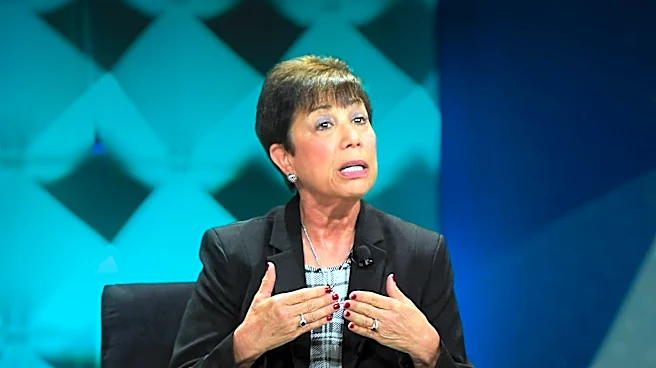
Alexandria Ocasio-Cortez, in a recent ABC News interview, referenced New York City Councilman Chi Ossé's statement that 'Woke 1 was crazyyyy,' in a discussion about the social justice movements of 2020. This term, 'Woke 1,' is being used to characterize
the period of the COVID-19 pandemic and the protests following George Floyd's murder, which popularized concepts like abolishing prisons and defunding the police. Ocasio-Cortez acknowledged a 'huge opening of the Overton Window' during 2020 and described the discussions as 'quite fruitful,' but concluded that the rhetoric from that time is not what would be used today. This re-evaluation has drawn attention from centrists and conservatives, who interpret it as an admission that the left's positions in 2020 were extreme. The original meaning of 'woke,' pertaining to the recognition of racist structures affecting Black life in the U.S., has been widely caricatured into a symbol of political correctness.
Why It's Important?
This reframing of 2020's social justice rhetoric by prominent progressive figures like Ocasio-Cortez and Ossé carries significant implications for the ongoing political discourse in the U.S. It suggests a potential shift in how certain progressive ideas, particularly those related to police reform and systemic racism, are discussed and advocated for within mainstream politics. By labeling past rhetoric as 'crazy,' it could alienate some activists and grassroots organizers who were at the forefront of those movements, while potentially appealing to a broader, more moderate electorate. This move might be seen as an attempt to distance the Democratic Party from the more radical elements of the 2020 protests, aiming to make progressive policies more palatable to a wider audience. Conversely, it risks undermining the foundational arguments and demands that emerged from those protests, which sought to address deep-seated issues of racial injustice and police brutality. The discussion highlights the tension between maintaining activist principles and achieving political viability.
What's Next?
The comments by Ocasio-Cortez and Ossé are likely to spark further debate within progressive circles regarding the efficacy and messaging of social justice movements. Activists and organizations that championed concepts like police abolition and defunding in 2020 may push back against the characterization of their efforts as 'crazy,' potentially leading to internal party divisions or renewed calls for more radical approaches. Politically, this shift in rhetoric could influence future campaign strategies, with candidates potentially adopting more moderate language on issues that were central to the 2020 protests. It may also be used by opposing political factions to highlight perceived inconsistencies or shifts in progressive ideology. The long-term impact will depend on whether this reframing leads to a sustained change in policy proposals or remains primarily a rhetorical adjustment. The ongoing conversation about the legacy of 2020's social movements and their integration into mainstream political platforms will continue to evolve.
Beyond the Headlines
The discussion surrounding 'Woke 1' delves into the complex interplay between social activism, political strategy, and public perception. The original concept of 'woke' was rooted in a critical awareness of systemic injustices, particularly racial ones. Its subsequent caricature and now, its re-evaluation by some progressive leaders, highlight a broader societal struggle to define and address issues of equity and justice. This situation raises questions about the sustainability of radical social movements within a mainstream political framework and the pressures on political figures to adapt their messaging for broader appeal. It also underscores the challenge of translating urgent material demands, such as addressing overpolicing, into actionable policy without diluting their original intent. The debate reflects a deeper tension between symbolic gestures, like land acknowledgements, and substantive reforms, such as reparations or genuine police accountability. The ethical dimension lies in whether political expediency should supersede the fidelity to the core principles of social justice movements.