
What's Happening?
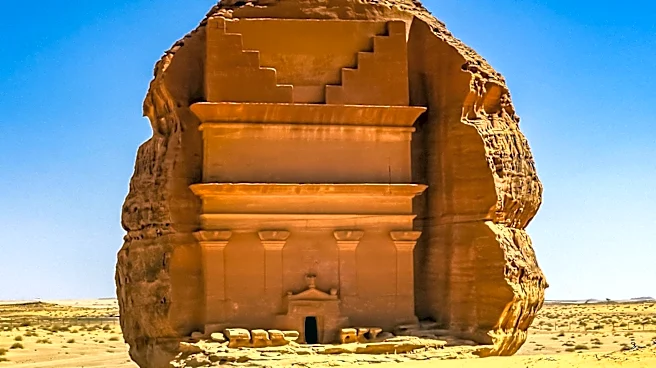
Nearly 20,000 rock-art panels have been discovered and documented in Saudi Arabia’s AlUla region, providing insights into 12,000 years of human life. The Royal Commission for AlUla (RCU) has launched an awareness
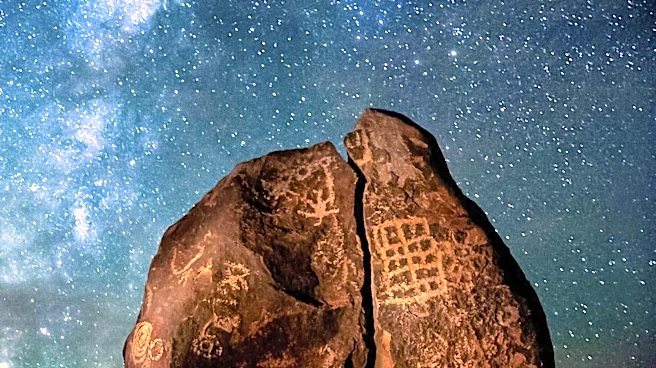
campaign to highlight these archaeological studies. The documented panels include over 66,000 animal figures and more than 11,000 human figures, forming the largest indexed regional database of rock art in the Arabian Peninsula. These findings offer a detailed record of changes in human life, climate, wildlife, and the environment over millennia. Researchers analyze overlapping drawings, carving techniques, subjects, inscriptions, and rock varnish to determine the relative age of the carvings. The art depicts a transition from hunting to pastoral life, with images of ibex, oryx, ostriches, cattle, and camels. It also illustrates significant environmental shifts, showing animals like wild cattle and African wild asses in areas that are now arid, suggesting a wetter Holocene period between 8,000 and 4,000 BC.
Why It's Important?
This extensive collection of rock art is crucial for understanding the ancient history and environmental changes of the Arabian Peninsula. The detailed record of human activities, from hunting and warfare to trade and daily life, provides invaluable data for archaeologists and historians. The depiction of horse-drawn chariots, particularly the 38 carvings found, with 25 in Wadi Al-Naam, suggests AlUla's historical significance as a hub for travelers and trade routes, connecting ancient urban centers. The rock art also serves as a unique environmental archive, illustrating dramatic climate shifts and the presence of now-extinct animals in the region. This information can help scientists reconstruct past ecosystems and understand long-term climate patterns, offering context for current environmental challenges. The ongoing tradition of rock art, extending to modern vehicles, highlights the continuous human impulse to record life and change.
What's Next?
The Royal Commission for AlUla's awareness campaign will continue until the end of the year, utilizing social media platforms to educate the public on the archaeological findings and documentation processes. This campaign aims to increase understanding of how archaeologists and local residents identify, document, and date these ancient carvings. Further research will likely delve deeper into specific themes, such as the evolution of warfare, trade networks, and the impact of climate change on ancient societies in the region. The comprehensive database will serve as a foundation for future studies, potentially attracting international researchers and fostering collaborations. The insights gained could also inform conservation efforts for these fragile historical sites and contribute to the development of cultural tourism in AlUla, promoting a deeper appreciation for the region's rich heritage.
Beyond the Headlines
The AlUla rock art transcends mere historical documentation; it offers a profound glimpse into the human experience across millennia. The continuity of rock art, from ancient hunting scenes to modern vehicles, underscores a fundamental human need for expression and record-keeping. This artistic tradition provides a unique lens through which to examine cultural evolution, technological advancements, and societal transformations. The detailed depictions of daily life, conflicts, and environmental interactions offer a powerful narrative of adaptation and resilience in a challenging landscape. Ethically, the preservation and interpretation of these sites require careful consideration, balancing archaeological research with cultural heritage protection and community engagement. The findings also highlight the interconnectedness of human societies with their environment, demonstrating how climate and ecological shifts profoundly influenced human migration, subsistence strategies, and cultural development, offering lessons relevant to contemporary global challenges.