


What's Happening?
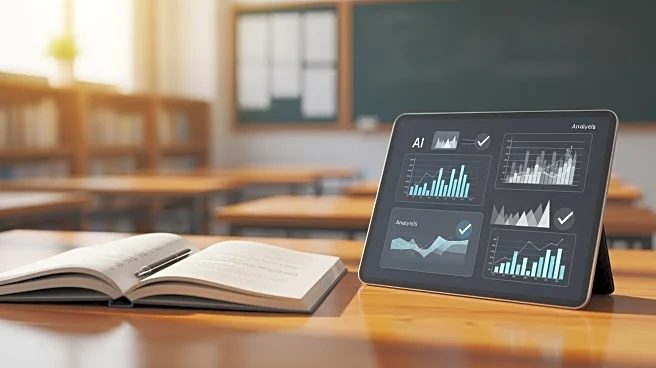
Artificial intelligence is being integrated into teacher evaluations, with some administrators using it to streamline classroom observations. AI tools are employed to synthesize observation notes and provide rubric-aligned feedback, potentially reducing
the time required for evaluations. However, the use of AI in this context raises concerns about transparency, data privacy, and the accuracy of assessments. Critics argue that AI lacks the ability to capture the nuances of classroom interactions, and there is a need for clear policies to guide its use in educational settings.
Why It's Important?
The introduction of AI in teacher evaluations could significantly impact the education sector by altering how teacher performance is assessed. While AI offers the potential to reduce administrative burdens and improve efficiency, it also poses risks related to data security and the potential loss of human oversight in evaluations. The debate highlights the need for a balanced approach that leverages AI's benefits while ensuring that human judgment remains central to the evaluation process. Establishing clear guidelines and policies will be crucial to address these challenges and protect the interests of educators and students.
What's Next?
Educational institutions may need to develop formal policies and guidelines to govern the use of AI in teacher evaluations. This could involve setting standards for data privacy and ensuring that AI tools are used transparently and ethically. As AI technology continues to evolve, ongoing dialogue among educators, policymakers, and technology developers will be essential to address emerging issues and ensure that AI is used responsibly in education. The outcome of these discussions could shape the future of teacher evaluations and the role of AI in education.