





What's Happening?
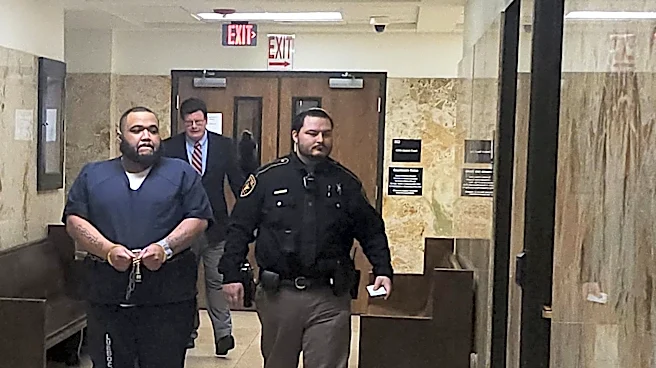
Two men, 19-year-old Logan D. Patterson and 21-year-old Dominick F. Cardoza, who pleaded guilty to causing an explosion at Harvard Medical School last November, have been sentenced to three years of probation and 300 hours of community service. U.S. District
Court Judge Angel Kelley opted against imposing a term of home confinement, a recommendation made by prosecutors, citing the defendants' youth and lack of prior criminal history. The incident involved the men illegally entering the Goldenson building at HMS and detonating a large commercial firework inside a wooden locker. In addition to probation and community service, they were ordered to jointly pay $28,517.70 in restitution to Harvard for the damages incurred.
Why It's Important?
This sentencing decision highlights the judicial system's consideration of factors such as age, prior criminal record, and the impact of public attention on defendants, even in cases involving significant property damage and a large-scale law enforcement response. The judge's decision to prioritize probation and community service over home confinement, despite prosecutorial recommendations, suggests a focus on rehabilitation and avoiding the long-term consequences of incarceration for young, first-time offenders. The restitution order ensures that Harvard is compensated for the damages, while the community service aims to provide a constructive consequence for the actions. This case also underscores the potential for seemingly minor acts of vandalism to escalate into serious legal issues, drawing the attention of federal agencies like the FBI.
What's Next?
Patterson and Cardoza will now begin their three-year probation period, during which they must complete 300 hours of community service and pay the ordered restitution to Harvard. As part of their probation terms, they are also required to write a letter of apology to Harvard and are encouraged to perform their community service at a University facility if feasible. Judge Kelley expressed hope that this incident would not define them and that they would not reappear in court. The case serves as a cautionary tale regarding the consequences of reckless behavior on university campuses and the legal ramifications that can follow, even for actions perceived as pranks.
Beyond the Headlines
The incident and subsequent sentencing raise broader questions about security protocols on university campuses and the balance between punitive measures and rehabilitative justice for young adults. The fact that two individuals could illegally enter a Harvard Medical School building and detonate an explosive device, regardless of intent, points to potential vulnerabilities in campus security. Furthermore, the judge's decision to lean towards probation rather than more severe penalties for a crime that involved an explosive device, albeit a commercial firework, sparks discussion about the appropriate legal response to such acts. It also highlights the ongoing debate about how the justice system should handle cases involving young offenders who commit acts of vandalism or property damage, especially when those acts trigger a significant public safety response.