







What's Happening?
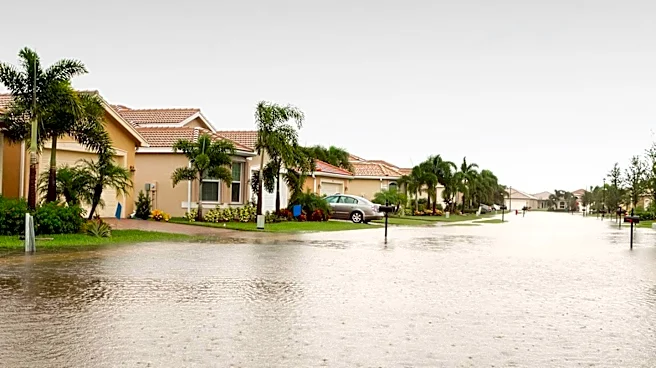
Florida is experiencing an unusual period of heavy rain and flooding during its dry season, which typically begins in November. This unexpected weather has overwhelmed drainage systems, leading to significant standing water in communities, particularly
in South Florida's Broward County and along Central Florida's Atlantic Coast. On November 18, West Hollywood received over 15 inches of rain in 24 hours, with surrounding areas seeing about 10 inches. Broward County and Hollywood have declared states of emergency, urging residents to shelter in place. Forecasters anticipate additional rainfall through the end of the week, with some areas potentially receiving up to 12 more inches. This situation highlights a critical issue: many Florida homeowners lack adequate flood insurance coverage, as standard home insurance policies typically do not cover water rising from streets or yards.
Why It's Important?
The current flooding in Florida is significant because it occurs outside the traditional hurricane season, challenging the perception that flood risks are seasonal. This event exposes a substantial 'flood insurance gap' among homeowners. Many residents, especially those not in high-risk flood zones, may not carry flood insurance, or their coverage from the National Flood Insurance Program (NFIP) may be insufficient (capped at $250,000 for buildings). This leaves them financially vulnerable to recovery costs. The Realtor.com 2026 Housing and Climate Risk Report indicates that over 6% of U.S. homes face severe flood risk, representing nearly $3.4 trillion in property value, yet NFIP policies decreased by 4.5% between May 2025 and May 2026. This gap could lead to massive uninsured losses, impacting individual homeowners' financial stability and potentially straining local economies.
What's Next?
Forecasters expect wet and windy conditions to persist, with additional rainfall projected across Eastern Florida through the end of the week. The Southeast may experience a cooler, rainier Thanksgiving, with rain potentially lingering from Texas to the southern Atlantic Coast throughout the holiday weekend. For homeowners, the immediate next step is to assess their current insurance policies and consider obtaining flood insurance if they do not have it. Experts advise comparing quotes from both the NFIP and private insurers, understanding coverage limits, deductibles, and waiting periods (federal coverage typically takes 30 days to activate). Additionally, homeowners are encouraged to take precautionary measures such as clearing gutters, grading soil away from foundations, and having sandbags ready to mitigate potential damage.
Beyond the Headlines
The unexpected dry-season flooding in Florida underscores a broader national challenge regarding climate change adaptation and insurance preparedness. It highlights that flood risk is not confined to coastal areas or hurricane seasons but can occur year-round due to intense rainfall events. This situation prompts a re-evaluation of how flood risk is assessed, communicated, and insured across the U.S. The reluctance or inability of many homeowners to secure adequate flood insurance, often due to cost or perceived low risk, creates a systemic vulnerability. This event could spur discussions on reforming flood insurance programs, increasing public awareness campaigns about year-round flood risks, and incentivizing homeowners to adopt proactive mitigation measures. Ultimately, it points to the need for a more comprehensive and dynamic approach to managing flood risks in a changing climate.