
What's Happening?
Russian forces have targeted the Pechenihy Reservoir dam in Ukraine's Kharkiv region, leading to a complete suspension of traffic across the structure. The attack prompted local authorities to take immediate
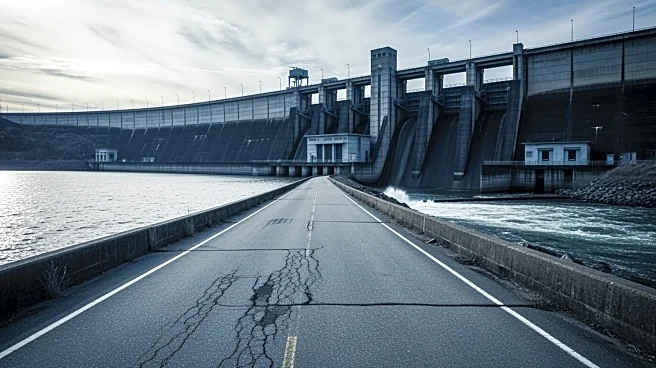
action to assess the damage and ensure public safety. Oleksandr Husarov, head of the Pechenihy settlement, announced the closure via Telegram, urging residents to avoid the area. Emergency teams and engineers are currently evaluating the extent of the damage to the dam, which is a significant hydro-engineering site in the region. The Pechenihy Reservoir spans 86.2 square kilometers and is crucial for the local infrastructure, affecting numerous riverside communities. As of now, no casualties have been reported, and structural experts are investigating whether the dam's integrity has been compromised.
Why It's Important?
The attack on the Pechenihy Reservoir dam underscores the ongoing conflict's impact on critical infrastructure in Ukraine. This development highlights the strategic importance of such sites in the conflict, as they play a vital role in regional water management and local economies. The disruption of traffic and potential damage to the dam could have significant implications for the surrounding communities, affecting their access to resources and mobility. Additionally, this incident may escalate tensions further, influencing diplomatic and military strategies in the region. The safety and functionality of infrastructure like the Pechenihy Reservoir are crucial for maintaining stability and supporting civilian life amid the conflict.
What's Next?
Emergency crews and engineers will continue to assess the damage to the Pechenihy Reservoir dam to determine the necessary repairs and ensure the structure's safety. Local authorities will likely implement measures to mitigate the impact on affected communities, including potential evacuations or resource allocations. The incident may prompt further international attention and response, potentially influencing ongoing diplomatic efforts to address the conflict. Monitoring the situation closely will be essential for understanding the broader implications for regional stability and humanitarian conditions.