
What's Happening?
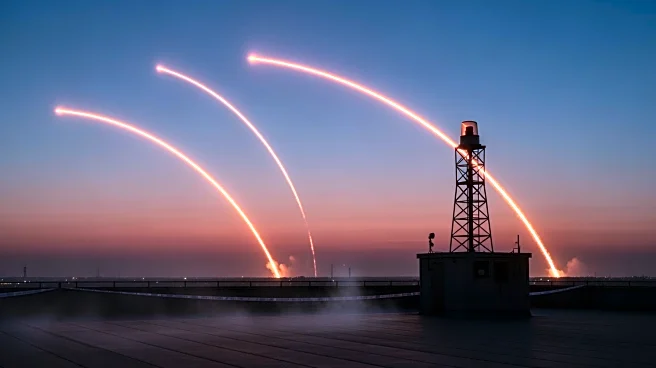
Air raid sirens were activated across various regions in Israel, including Tel Aviv and Jerusalem, as a response to missile threats. The Israeli Defense Forces (IDF) reported that the missile barrage was limited and successfully intercepted, with no injuries
reported. In response, the IDF conducted airstrikes targeting financial storage facilities linked to Al-Qard Al-Hassan, an organization associated with Hezbollah. These facilities are reportedly used to fund terrorist activities, including the purchase of weapons and payment of operatives. The strikes are part of ongoing efforts to weaken Hezbollah's military capabilities. Additionally, a U.S. Army Patriot air defense battery has been deployed in Turkey as part of NATO's regional defense strategy.
Why It's Important?
The interception of missile threats and subsequent IDF strikes underscore the ongoing security challenges faced by Israel, particularly from Hezbollah and other pro-Iranian groups. The deployment of U.S. military assets in Turkey highlights the broader geopolitical tensions in the region and the involvement of international forces in maintaining stability. These developments have significant implications for regional security dynamics, potentially affecting diplomatic relations and military strategies. The situation also impacts the civilian population in Israel, who are subject to the constant threat of missile attacks, influencing public sentiment and government policy.
What's Next?
The IDF is likely to continue its military operations against Hezbollah to further degrade its capabilities. The international community, including the United States and NATO, may increase their involvement in regional defense strategies to prevent escalation. Diplomatic efforts might be pursued to address the underlying tensions between Israel and pro-Iranian groups. Monitoring the situation will be crucial for understanding the potential for further conflict or resolution.