






What's Happening?
Scientists have discovered a new metallic alloy in the debris from the Hiroshima atomic bombing, offering insights into materials formed under extreme conditions. Luca Bindi, an earth scientist from the University of Florence, identified the alloy while
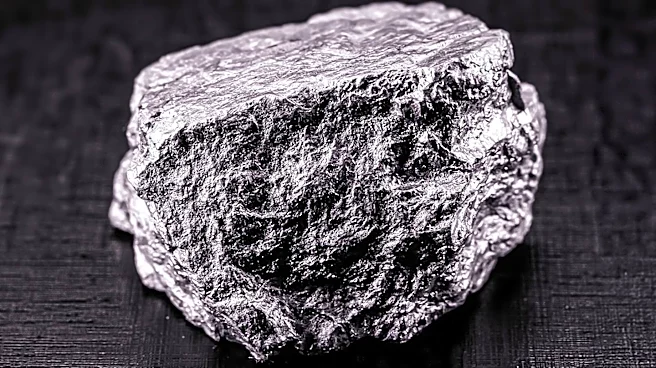
examining microscopic debris from Hiroshima Bay. The alloy consists of iron, chromium, nickel, manganese, molybdenum, silicon, and aluminum, arranged in a homogeneous cubic lattice. This structure is unique and has not been observed in nature or laboratory settings before. The discovery highlights the potential for nuclear explosions to create novel materials, serving as physical archives of the conditions during the explosion.
Why It's Important?
The discovery of this new alloy is significant for materials science, as it provides a rare example of substances formed under extreme conditions that are difficult to replicate in laboratories. Understanding the formation and structure of such materials can offer insights into the principles of matter formation, potentially applicable to other extreme events like meteorite impacts and lightning strikes. This research could lead to advancements in materials science, influencing the development of new materials with unique properties. The findings also contribute to historical knowledge about the aftermath of nuclear explosions and their long-term environmental impacts.
What's Next?
Further research is needed to explore the properties and potential applications of the newly discovered alloy. Scientists may investigate whether similar materials can be synthesized in controlled environments, potentially leading to new technological applications. The discovery could also prompt studies into other extreme events to identify additional unique materials, expanding the understanding of matter formation under non-standard conditions. Collaboration between materials scientists and nuclear researchers may be necessary to fully explore the implications of this finding and its potential contributions to science and industry.
Beyond the Headlines
The discovery of the alloy in Hiroshima bombing debris raises ethical and historical considerations about the legacy of nuclear explosions. It underscores the complex interplay between scientific advancement and the destructive power of nuclear weapons. The research highlights the importance of studying the environmental and material impacts of such events, contributing to discussions about nuclear policy and the preservation of historical sites. The findings may also inspire broader inquiries into the role of extreme conditions in shaping the natural world, influencing future scientific exploration and ethical considerations in materials research.