






What's Happening?
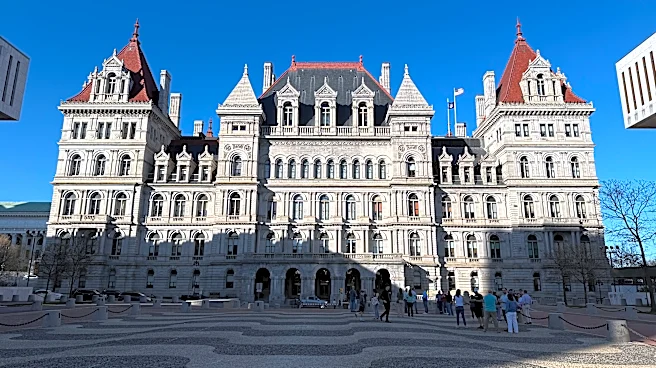
Jessica Bowie, 35, of Albany, New York, has been charged with federal terrorism after allegedly plotting to bomb the New York State Capitol building and kill lawmakers. Authorities stated that Bowie, who converted to Islam approximately five years ago,
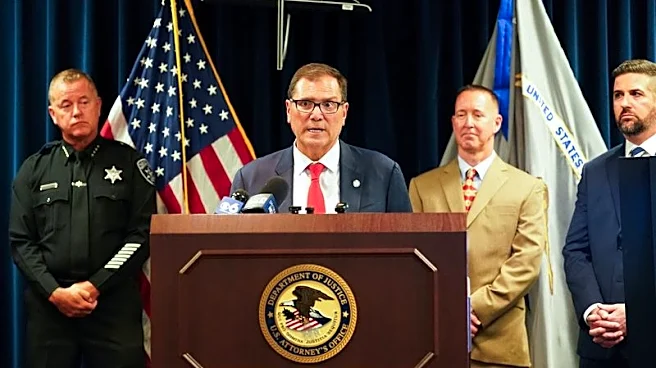
believed that laws being passed were an affront to her faith. She was under surveillance for over a month by the FBI, communicating with confidential informants posing as ISIS facilitators. Operatives assisted her plans, providing funds for bomb ingredients and, eventually, a gun, ammunition, and an inert explosive device. Bowie conducted multiple reconnaissance trips to the Capitol grounds to plan the attack's effectiveness and scope out security measures. She also arranged to acquire a firearm and ammunition to engage police or security if necessary. FBI agents arrested Bowie after she left a meeting where she received the weapons. Following her arrest, Bowie reportedly told agents, “There’s no helping me, you guys know enough.”
Why It's Important?
This incident highlights the ongoing threat of domestic terrorism and radicalization within the United States, even from individuals acting alone or in small groups. The alleged targeting of the New York State Capitol and lawmakers underscores a broader concern about political violence and threats against public officials, a trend that Governor Kathy Hochul's office acknowledged has led to strengthened security measures across state government. The FBI's successful sting operation demonstrates the critical role of counterterrorism efforts in preventing potential attacks and protecting democratic institutions. The case also brings to light the complexities of monitoring and intervening when individuals express extremist views online and then attempt to act on them, emphasizing the need for vigilance and intelligence gathering to safeguard public safety and governmental stability.
What's Next?
Jessica Bowie will face federal terrorism charges, and the legal process will proceed with her arraignment and subsequent court hearings. The investigation will likely continue to uncover any potential wider connections or influences, although the current information suggests she was acting largely independently, albeit with the unwitting assistance of FBI informants. State and federal authorities will likely review and potentially enhance security protocols at government buildings, including the New York State Capitol, in response to this alleged plot. This incident may also prompt further public discourse on the nature of domestic extremism, online radicalization, and the balance between civil liberties and national security measures. The outcome of Bowie's trial will set a precedent for similar cases involving alleged plots against government entities.
Beyond the Headlines
This case delves into the complex intersection of religious belief, extremist ideology, and mental state, as Bowie's alleged motive was rooted in her perception of laws being an affront to Islam. It raises questions about how individuals become radicalized and the pathways from online expression of extremist views to concrete plans for violence. The use of an FBI sting operation, while effective in preventing an attack, also brings ethical and legal considerations regarding entrapment into focus, which will likely be a point of contention in the legal proceedings. Furthermore, the incident reflects a broader societal challenge in distinguishing between protected speech and actionable threats, particularly in an era of heightened political polarization and the proliferation of extremist content online. The long-term implications could include increased scrutiny of online platforms and communities where such ideologies are fostered, and a re-evaluation of strategies to counter domestic terrorism that address both its ideological roots and its operational manifestations.