



What's Happening?
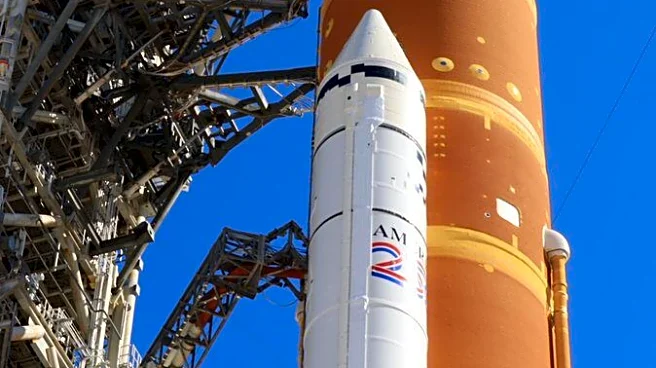
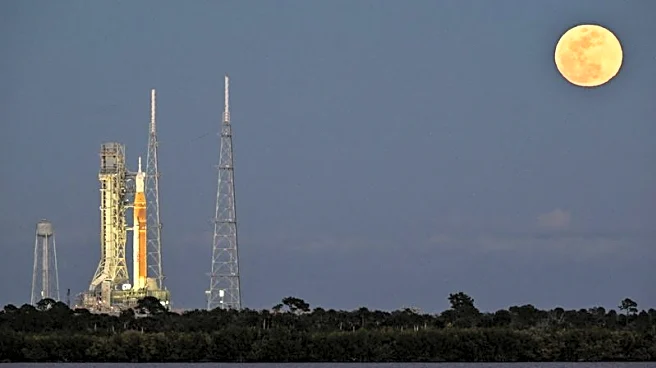
NASA has announced plans to launch the Artemis II mission in March, following a successful rocket fueling test. The mission aims to send astronauts to the moon for the first time since the Apollo program. The recent test overcame previous hydrogen leak
issues, marking a significant step towards the mission's launch. The Artemis II mission will involve a lunar fly-around with a crew of four astronauts, including three Americans and one Canadian. The mission is part of NASA's broader goal to return humans to the lunar surface.
Why It's Important?
The Artemis II mission represents a pivotal moment in U.S. space exploration, marking the country's return to manned lunar missions after more than 50 years. This mission is crucial for advancing scientific knowledge and maintaining U.S. leadership in space exploration. It also has significant implications for international collaboration, as it includes a Canadian astronaut. The success of this mission could pave the way for future lunar landings and potentially establish a sustainable human presence on the moon.
What's Next?
NASA is preparing for the final flight readiness review, which, if successful, will lead to the launch in early March. The mission's success could influence future space exploration strategies and funding. Additionally, the selection of a lunar lander provider for the subsequent Artemis III mission remains a critical decision, with companies like SpaceX and Blue Origin in contention. The outcome of these developments will shape the future of lunar exploration and international partnerships in space.