





What's Happening?
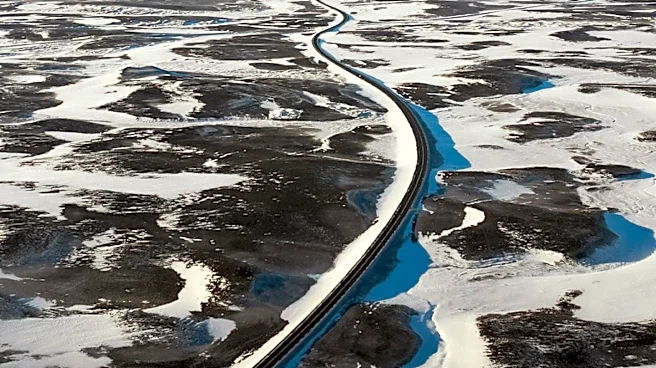
A federal appeals court has denied a request by the Defenders of Wildlife to halt the construction of a nearly 3-mile road segment within the Izembek National Wildlife Refuge on the Alaska Peninsula. This decision is a victory for the federal government,
the Dunleavy administration, and the King Cove Corp., an Alaska Native village corporation, which are pushing for the road's construction. The segment is located on land owned by the village corporation and could be the initial part of a proposed 19-mile road through the refuge, estimated to cost $66 million. The full road project is currently in legal limbo after conservation groups and Alaska tribes won a separate federal district court case, ruling that the Trump administration violated laws in a 2025 land exchange. The state of Alaska has begun construction on the segment, with plans for completion by next summer, and intends to appeal the ruling against the full road.
Why It's Important?
This court decision allows a critical initial phase of a controversial road project to proceed, impacting a federally protected wildlife refuge. While the 3-mile segment is on village corporation land, its construction is seen by opponents as a precedent and a step towards the larger 19-mile road, which they argue would cause irreparable damage to the refuge's wildlife and wilderness. The ongoing legal battles highlight a fundamental conflict between local community needs for improved access to medical care (King Cove residents seek connection to Cold Bay's airport) and environmental conservation efforts to protect sensitive ecosystems. The state's determination to build the road, despite legal setbacks and questions about federal funding eligibility, underscores the high stakes involved for both economic development and environmental protection in Alaska.
What's Next?
Construction on the 2.8-mile road segment is expected to continue, with completion anticipated by next summer. The state of Alaska plans to appeal the federal district court ruling that blocked the full 19-mile road project. This will prolong the legal battle over the larger road's future. Meanwhile, conservation groups like Defenders of Wildlife will likely continue their efforts to protect the Izembek refuge, potentially through further legal challenges or advocacy. Questions remain about the eligibility of the current construction for federal funding and the overall cost of the project, which could impact other transportation needs in Alaska. The public comment period for the state's draft transportation plan, which includes both the segment and the full road, will also be a key opportunity for stakeholder input.
Beyond the Headlines
The Izembek road project is a microcosm of broader conflicts over land use, resource development, and environmental protection in the United States, particularly in Alaska's vast and ecologically sensitive regions. It pits the immediate human needs of a remote community against the long-term ecological integrity of a protected wilderness area. The involvement of an Alaska Native village corporation adds another layer of complexity, highlighting issues of tribal sovereignty and economic development within indigenous communities. The legal challenges and the state's persistence in construction, even without guaranteed federal funding, underscore the deep-seated political and economic interests at play. This case could set precedents for future development projects in protected areas, influencing how environmental laws are interpreted and applied in the face of perceived human necessity.