
What's Happening?
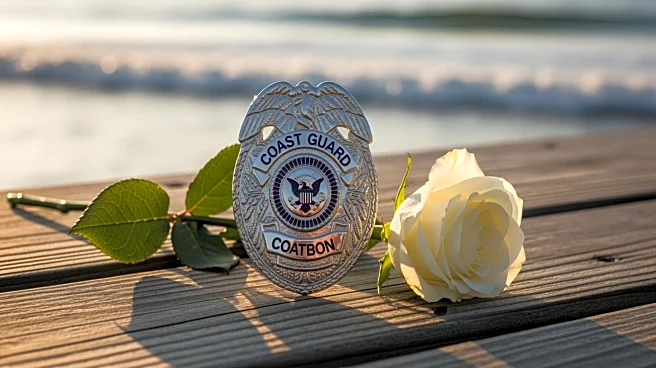
Tyler Jaggers, a U.S. Coast Guard rescue swimmer, tragically passed away after sustaining injuries during a medical evacuation mission off the Washington coast. Before his death, two significant ceremonies were held in his honor. His partner accepted
a wedding proposal on his behalf, orchestrated by his family at his hospital bedside. Additionally, Jaggers was awarded the Distinguished Flying Cross, a prestigious military honor for heroism during flight, and was posthumously promoted to petty officer 2nd class. Jaggers was part of a crew responding to a medical emergency on a commercial vessel when he fell while being lowered from a helicopter. Despite being on life support and receiving treatment in both Canada and the U.S., he succumbed to his injuries. The Coast Guard is investigating the incident to determine the cause of his fall.
Why It's Important?
This incident highlights the inherent risks faced by Coast Guard personnel during rescue operations. Jaggers' death underscores the bravery and dedication of those serving in the Coast Guard, who often operate in dangerous conditions to save lives. The posthumous honors reflect the high regard in which Jaggers was held by his peers and superiors, emphasizing the value placed on courage and selflessness in military service. The investigation into the incident may lead to changes in safety protocols, potentially impacting future rescue operations and training procedures. This event also brings attention to the emotional and personal sacrifices made by service members and their families.
What's Next?
The Coast Guard's ongoing investigation will seek to uncover the circumstances leading to Jaggers' fall, which could result in recommendations for improved safety measures. The findings may influence future training and operational guidelines to prevent similar tragedies. Additionally, the Coast Guard community and Jaggers' family may engage in memorial activities to honor his service and sacrifice. The broader military community might also review and reinforce support systems for families of service members who are injured or killed in the line of duty.