


What's Happening?
President Trump has adopted a 'low-key' strategy concerning Iran, shifting away from immediate military escalation while maintaining pressure through sanctions, economic measures, and a naval blockade. This approach follows the expiration of a 60-day
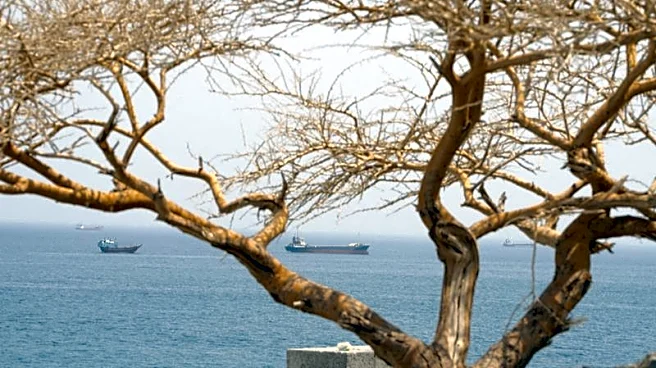
deadline for a peace deal between the U.S. and Iran, during which President Trump had previously warned of being 'locked and loaded.' Despite the lack of a formal peace agreement, President Trump indicated that Washington is 'semi-negotiating' with Tehran, a characterization disputed by Iranian officials. The strategy centers on three elements: economic pressure, the naval blockade, and continued diplomatic contacts. The U.S. has sanctioned over 1,000 individuals, vessels, and aircraft linked to Iran and is considering additional measures against Chinese entities involved in Iranian oil transactions. The Strait of Hormuz has become a central bargaining chip, with Iran linking its reopening to U.S. concessions on sanctions and compensation for war-related damages.
Why It's Important?
This strategic shift by President Trump signifies a recalibration of U.S. foreign policy towards Iran, prioritizing economic leverage and diplomatic channels over immediate military action. The emphasis on economic pressure aims to compel Iran to negotiate by exacerbating its financial difficulties, which President Trump believes will make Tehran more amenable to compromise. The naval blockade in the Strait of Hormuz, a critical global oil transit point, underscores the economic impact on Iran's ability to export and import goods, thereby intensifying financial strain. The 'low-key' approach seeks to achieve U.S. objectives without incurring the significant costs and risks associated with a prolonged military conflict. However, the effectiveness of this strategy hinges on whether Iran's leadership will yield to economic pressure or continue to resist, potentially prolonging the standoff and impacting global energy markets and shipping routes.
What's Next?
The immediate focus will be on whether the economic pressure and diplomatic efforts can lead to a resolution regarding the Strait of Hormuz. If Iran agrees to reopen the waterway without securing all its demands, it could be seen as a validation of President Trump's strategy. Conversely, continued Iranian resistance would prolong the standoff, with ongoing implications for global energy prices and maritime security. The U.S. administration is also considering further sanctions, particularly targeting Chinese companies and financial institutions that facilitate Iranian oil transactions, which could create friction with Beijing. The role of intermediaries like Oman, Pakistan, and Qatar in facilitating backchannel communications will remain crucial. The central question is whether this combination of pressure and restraint will ultimately push Tehran towards a comprehensive agreement or if Iran will continue to use its own leverage to resist U.S. demands.
Beyond the Headlines
President Trump's 'low-key' strategy highlights the complexities of modern international diplomacy, where economic warfare and indirect negotiations can be as potent as military force. The approach reflects a calculated risk that sustained economic pressure can achieve strategic objectives without direct military engagement, thereby avoiding potential escalations and human costs. However, this strategy also carries risks, including the potential for unintended consequences such as humanitarian crises in Iran, increased regional instability, or a backlash from international partners affected by sanctions. The ongoing debate over who truly holds authority within Iran's complex power structure further complicates diplomatic efforts, raising questions about the enforceability of any potential agreement. This situation underscores the delicate balance between applying pressure and maintaining open channels for dialogue in highly volatile geopolitical contexts.