






What's Happening?
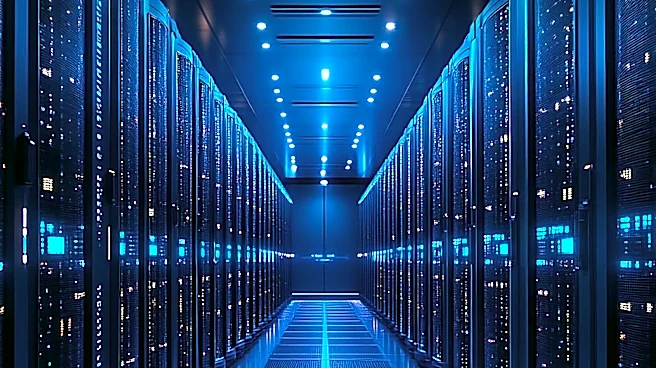
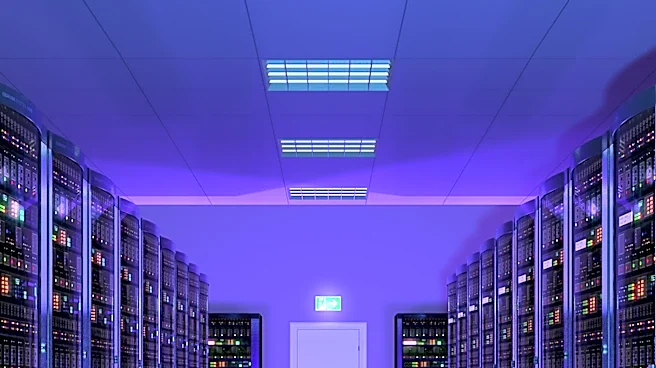
A recent modeling study by an international research team, led by TU Wien, suggests that AI data centers in the U.S. could operate within existing grid capacities by reducing electricity consumption for as little as 35 hours per year. This approach challenges
the traditional view of data centers as constant consumers and proposes they become flexible entities that adapt to grid conditions. The study highlights that many computing tasks, such as training large AI models, can be shifted to times when renewable energy is abundant. This flexibility would require special contracts guaranteeing a base capacity while allowing temporary reductions during grid strain. The research also points out the need for better data on data center electricity consumption to effectively plan grid infrastructure. Currently, the energy demand of AI data centers is dramatically increasing, with 39% of gas-fired power generation capacity under development in the U.S. by the end of 2025 intended to supply these facilities, raising concerns about the energy transition.
Why It's Important?
The increasing energy demands of AI data centers pose a significant challenge to the U.S. energy transition and grid stability. The current practice of treating data centers as conventional, constant consumers can strain existing infrastructure and lead to the development of new fossil-fuel power plants, potentially undermining sustainability efforts. This study's findings are crucial because they offer a pathway for data centers to become part of a future-proof energy system rather than a hindrance. By adopting flexible consumption models, data centers could help stabilize the power grid, especially as renewable energy sources become more prevalent but also more intermittent. This shift could reduce the need for costly and environmentally impactful grid expansions and new fossil fuel generation. Furthermore, the emphasis on better data collection regarding data center energy use is vital for accurate grid planning and resource allocation, benefiting utilities, energy providers, and ultimately, consumers through more reliable and sustainable energy supplies.
What's Next?
The research team recommends a re-evaluation of how data centers are integrated into grid planning, moving away from the assumption of constant power supply. Future steps could involve the development of specialized contracts between data centers and energy providers that incorporate flexible demand mechanisms. This would allow data centers to temporarily reduce consumption during peak grid stress or when renewable energy availability is low. Additionally, there is a call for improved data collection on data center electricity consumption, including anonymized operational data and hardware information, to enable more effective grid infrastructure planning. Policymakers and utility companies may need to collaborate to establish frameworks and incentives that encourage data centers to adopt these flexible operating models. The potential for data centers to utilize waste heat for local communities is also a consideration for future integration, aiming to create more symbiotic relationships between these facilities and their surrounding areas.
Beyond the Headlines
The implications of this study extend beyond immediate energy consumption, touching upon broader ethical and economic considerations. The rapid expansion of AI data centers, if not managed sustainably, could exacerbate environmental concerns and create energy inequities, where local communities bear the costs of grid expansion without fully realizing the benefits. The study implicitly raises questions about corporate responsibility in the tech sector, urging companies to prioritize sustainable energy practices and community engagement. By advocating for data centers to become flexible consumers, the research suggests a paradigm shift in how large-scale energy users interact with the grid, potentially setting a precedent for other energy-intensive industries. This could lead to a more decentralized and resilient energy system, where demand-side management plays a crucial role in balancing supply and demand, especially with the increasing integration of renewable energy sources. The long-term shift could foster innovation in energy management technologies and business models, promoting a more sustainable and equitable energy future.