




What's Happening?
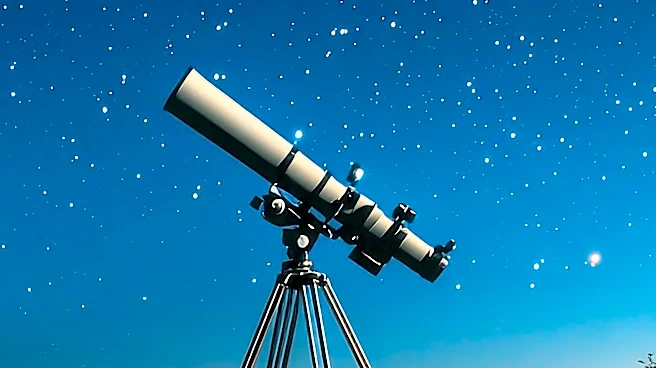
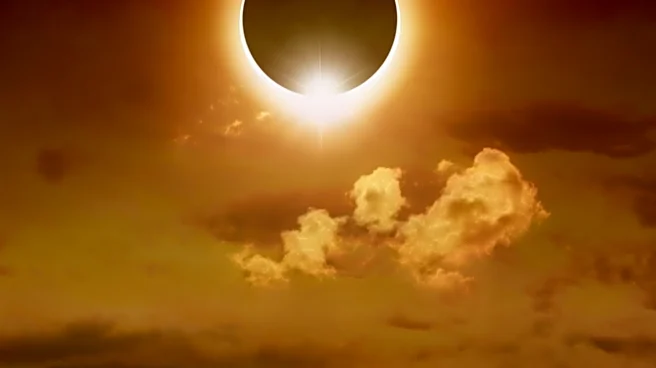
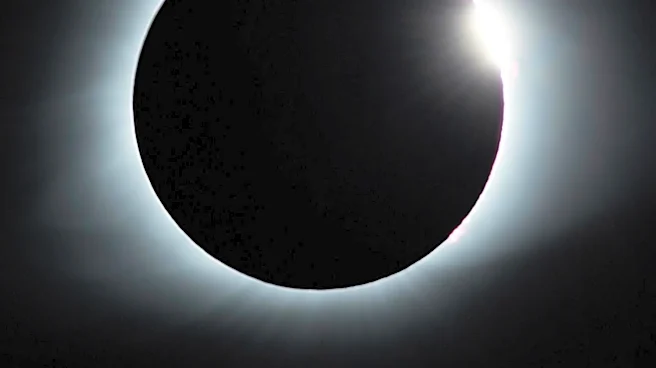
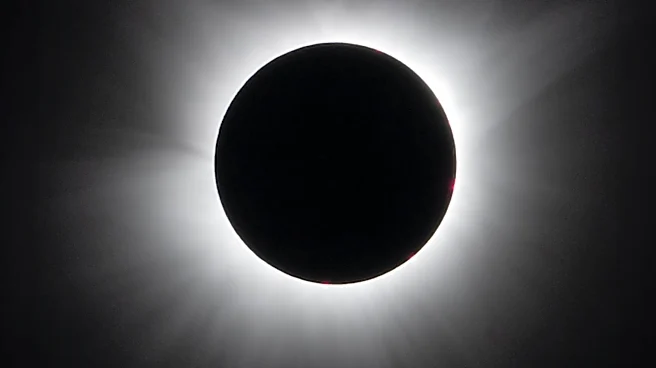
On July 28, 1851, Johann Julius Friedrich Berkowski, a Prussian daguerreotypist, captured the first-ever photograph of a total solar eclipse. Using a small telescope and the daguerreotype process, Berkowski successfully documented the eclipse, showcasing
the sun's corona. This achievement marked a significant milestone in astronomical photography, allowing scientists to study solar eclipses and the sun's outer atmosphere in greater detail. The photograph was hailed for its correct exposure, setting a precedent for future eclipse photography.
Why It's Important?
Berkowski's photograph opened new avenues for scientific exploration and public engagement with astronomical events. By providing a visual record of a solar eclipse, it enabled scientists to analyze the sun's corona and other celestial phenomena more effectively. This development also made such rare events more accessible to the general public, fostering a greater interest in astronomy. The evolution of eclipse photography from daguerreotypes to modern digital cameras reflects technological advancements that have democratized access to scientific observation.
What's Next?
The legacy of Berkowski's work continues to influence modern eclipse photography. With the next total solar eclipse visible in parts of Greenland, Iceland, and Spain on August 12, 2026, enthusiasts and scientists alike are preparing to capture the event using advanced equipment. This ongoing interest in solar eclipses highlights the enduring fascination with celestial phenomena and the role of technology in enhancing our understanding of the universe.