



What's Happening?
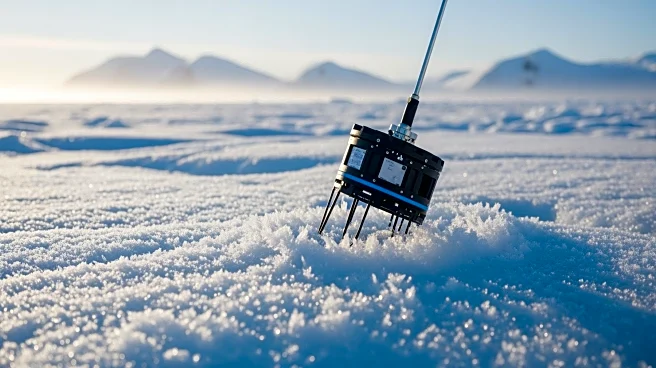
A robotic ocean float, missing for two and a half years, has resurfaced in eastern Antarctica, providing valuable data on the region's glaciers. The float, initially deployed to study the ocean around the Totten Glacier, drifted away but continued to collect
crucial temperature and salinity data from beneath the ice shelves. Despite GPS communication issues, scientists were able to use satellite measurements to approximate the data's location. The findings indicate that while the Shackleton ice shelf is relatively stable, the Denman Glacier is highly susceptible to melting and damage. This data is critical for understanding the dynamics of glacier melt and its contribution to sea-level rise.
Why It's Important?
The data collected by the recovered ocean float is significant as it enhances understanding of the Antarctic region's vulnerability to climate change. The melting of glaciers like the Denman Glacier could lead to irreversible ice loss and significant sea-level rise, impacting global coastlines. Higher sea levels can result in more frequent coastal flooding, infrastructure damage, and loss of habitats. This research underscores the importance of monitoring Antarctic ice melt to predict and mitigate its global impacts. The study highlights the interconnectedness of global ecosystems and the potential for widespread consequences if Antarctic ice continues to retreat.
What's Next?
The findings from the recovered probe will likely prompt further research into the stability of Antarctic glaciers and their role in global sea-level rise. Scientists may deploy additional instruments to gather more comprehensive data and refine predictions about future changes. Policymakers and environmental groups might use this information to advocate for stronger climate action and adaptation strategies. Public awareness campaigns could also be launched to educate communities about the potential impacts of rising sea levels and the importance of sustainable practices to mitigate climate change.
Beyond the Headlines
The discovery of the probe and its data highlights the challenges and importance of conducting research in remote and harsh environments like Antarctica. It also raises questions about the long-term sustainability of human activities that contribute to climate change. The study serves as a reminder of the urgent need for global cooperation in addressing environmental issues and the potential for scientific advancements to drive policy changes. As the effects of climate change become more pronounced, the role of science in informing public policy and individual actions will be increasingly critical.