
What's Happening?
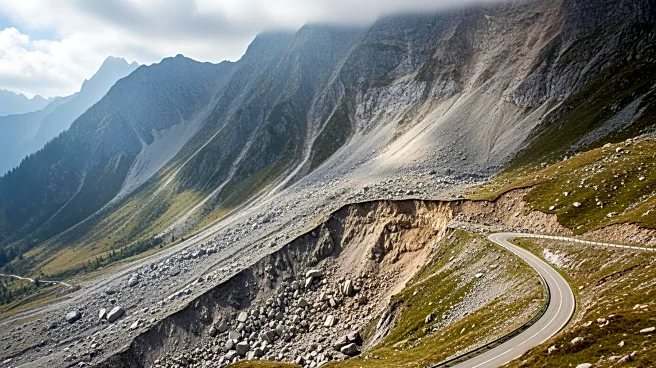
A significant landslide in the town of Niscemi, Sicily, has led to the evacuation of over 1,500 residents. Triggered by days of heavy rain from Cyclone Harry, the landslide has created a 4-kilometer stretch
of unstable ground, causing homes and cars to fall from a newly formed cliff. The Italian government has declared a state of emergency for the region, allocating an initial 100 million euros to aid affected areas. Civil protection crews have established a 150-meter wide 'no go zone' around the landslide area, and authorities have warned that the ground remains too unstable for residents to return. The landslide has revived political debates over construction practices in geologically unstable areas.
Why It's Important?
The landslide in Niscemi highlights the ongoing challenges of managing natural disasters in regions with known geological vulnerabilities. The event underscores the need for effective urban planning and disaster preparedness in areas prone to such risks. The Italian government's response, including emergency funding and relocation efforts, is crucial for the immediate welfare of displaced residents. The situation also raises questions about long-term infrastructure investments and the prioritization of resources, as political leaders debate the allocation of funds for controversial projects versus immediate disaster relief.
What's Next?
The Italian government is expected to continue its efforts to provide financial assistance and support to the displaced residents of Niscemi. Authorities will need to assess the stability of the land and determine safe areas for reconstruction. The political discourse surrounding construction practices and resource allocation is likely to intensify, with potential implications for future infrastructure projects in Sicily and other vulnerable regions. The situation may prompt a reevaluation of building regulations and disaster preparedness strategies to prevent similar incidents in the future.
Beyond the Headlines
The landslide in Niscemi serves as a reminder of the broader impacts of climate change and extreme weather events on vulnerable communities. It highlights the ethical responsibility of governments and developers to consider environmental risks in urban planning. The incident may lead to increased scrutiny of construction practices in geologically unstable areas and could influence policy changes aimed at enhancing resilience against natural disasters. Additionally, the event may foster greater public awareness and advocacy for sustainable development practices.