



What's Happening?
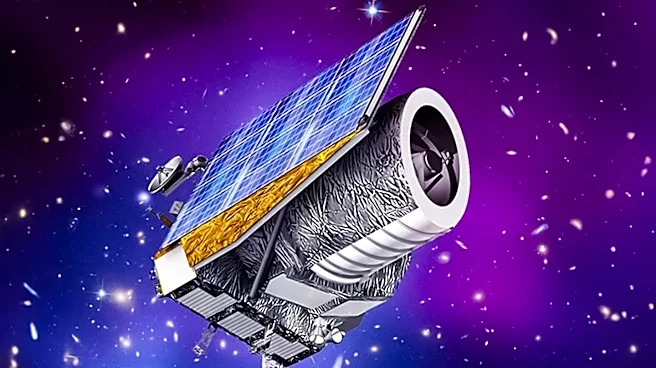
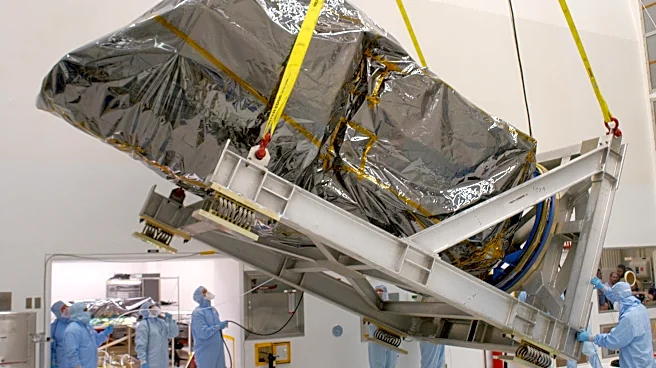
Penn State Assistant Professor Charlotte Ward and a team of four graduate students—Maddy Reich, Miranda Zak, Pei-Jun Huang, and Kendall Sippy—are actively developing software tools crucial for analyzing data from NASA's upcoming Nancy Grace Roman Space
Telescope. This telescope is designed to observe vast areas of the universe with unprecedented detail, aiming to capture images of over a billion galaxies. The students' work focuses on creating software and analysis tools that will help researchers understand the shapes, colors, distances, and physical properties of galaxies. Their contributions are essential for processing the massive datasets the Roman Telescope will generate, transforming raw images into scientific discoveries. The team is also working on integrating data from the Roman Space Telescope with observations from the ground-based Vera C. Rubin Observatory, combining infrared and optical wavelengths for a more comprehensive view of the universe.
Why It's Important?
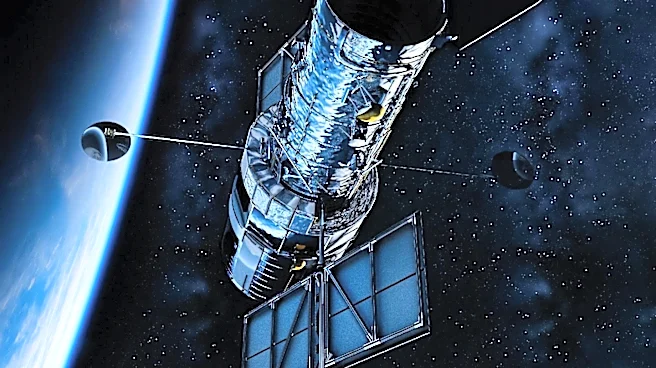
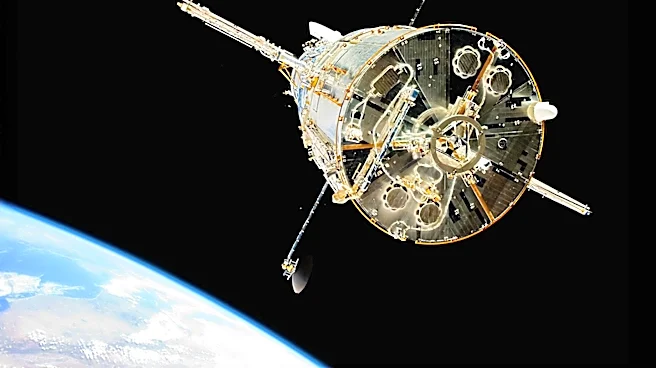
The Nancy Grace Roman Space Telescope is poised to revolutionize astronomy by providing a field of view roughly 100 times larger than Hubble's, enabling it to observe significantly more data on galaxies in a shorter timeframe. The software developed by the Penn State team is critical for making this vast amount of data usable for scientific research. Their work will facilitate studies on dark matter, dark energy, and supermassive black holes, potentially leading to breakthroughs in our understanding of the universe's evolution. This project also provides invaluable experience for graduate students, allowing them to contribute to a major scientific endeavor and develop advanced skills in data analysis and software engineering. Their involvement ensures that the next generation of astronomers is equipped to handle the complex datasets produced by cutting-edge observatories, fostering innovation and discovery in the field.
Beyond the Headlines
The collaboration between NASA and academic institutions like Penn State highlights the distributed nature of modern scientific research, where specialized expertise from various sectors converges to achieve ambitious goals. The development of robust software pipelines is increasingly vital in an era of 'big data' astronomy, where the sheer volume of information from new telescopes can overwhelm traditional analysis methods. This project not only prepares for the Roman Telescope's data but also shapes how astronomers will approach data analysis in the future, emphasizing the importance of interdisciplinary skills in science. Furthermore, the focus on discovering 'unusual astronomical events' and objects that don't fit current understandings encourages a scientific mindset of openness and adaptability, crucial for genuine breakthroughs. The involvement of students in such a foundational capacity ensures that the scientific community will be ready to maximize the Roman Telescope's potential from day one.